
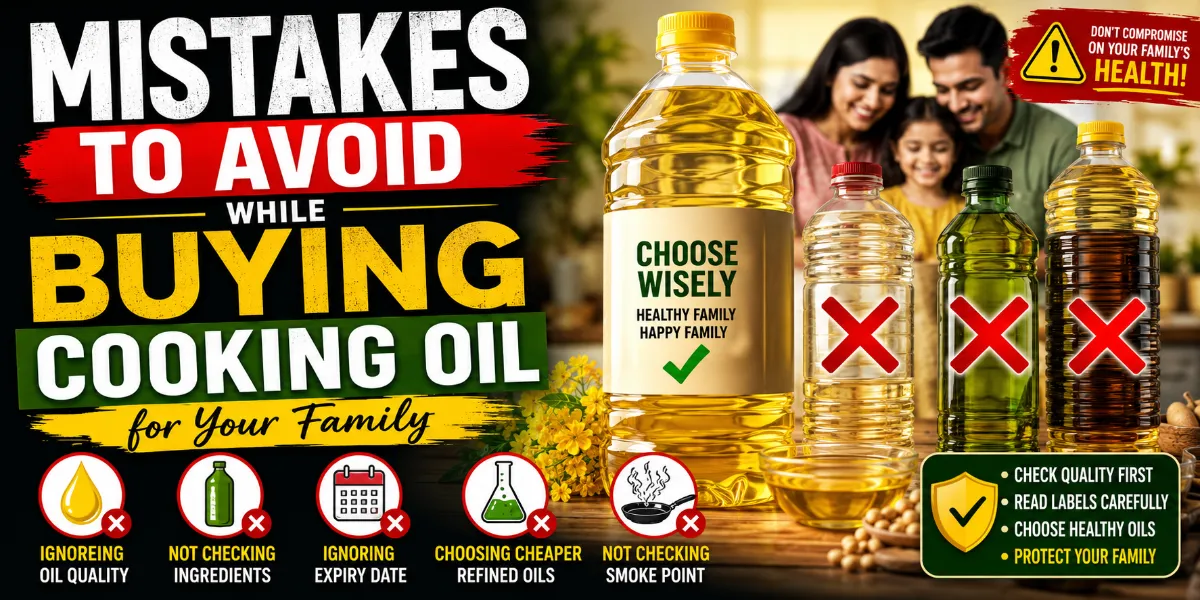
Mistakes to Avoid While Buying Cooking Oil for Your Family
Walk into any kitchen in Pakistan, and you will find a bottle of cooking oil sitting near the stove. It is such a common sight that we rarely think about it. We grab whatever is available, whatever is cheap, or whatever we have always used. But here is the uncomfortable truth. The cooking oil you choose can either protect your family's health or slowly harm it.
Cooking oil is not just a cooking medium. It is a source of essential fats that your body needs. It affects your heart, your brain, your skin, and even your digestive system. When you buy the wrong oil, or worse, when you buy adulterated or expired oil, you are putting your entire family at risk. This is not an exaggeration. This is a serious health concern that deserves your attention.
Many people make mistakes while buying cooking oil. These mistakes are not due to carelessness alone. They happen because of lack of awareness. The market is full of traps. Sellers use clever tactics to sell low-quality oil. They mix cheap oils with expensive ones. They use artificial colors to make the oil look fresh. They sell expired oil at discounted prices. The list goes on.
This blog is a complete guide to help you avoid these mistakes. It will teach you what to look for, what to avoid, and how to protect your family. Read carefully. Share this with your friends and family. Awareness is the first step toward better health.
Mistake 1: Buying Loose Cooking Oil
One of the most common mistakes people make is buying loose cooking oil. You have seen it at the local shop. The seller pours oil from a large drum into a small bottle or container. It seems convenient and often cheaper. But this practice is extremely dangerous.
Why is loose oil dangerous? Let us count the reasons.
First, you have no idea where that oil came from. It could be a mix of different oils. It could be oil that has been sitting in that drum for months or even years. The seller might not even know the source himself.
Second, loose oil is rarely pure. Sellers often mix cheaper oils with expensive ones to increase their profit margins. For example, they might mix palm oil with sunflower oil. Palm oil is high in saturated fat and harmful to your heart. But you would never know because the oil looks the same.
Third, loose oil is exposed to air and light. Both of these cause oxidation. Oxidation makes the oil rancid. Rancid oil has a bitter taste and produces harmful free radicals in your body. Free radicals are linked to cancer, heart disease, and premature aging.
Fourth, loose oil is often stored in unsanitary conditions. Dust, dirt, and even insects can contaminate the oil. You are essentially buying oil that has been sitting in an open drum in a hot shop. This is a recipe for disaster.
Be aware of the risks. Never buy loose cooking oil. Always buy oil that is packaged in sealed, branded containers. This is the only way to ensure purity and safety.
Mistake 2: Ignoring the Expiry Date
This is a mistake that almost everyone makes at some point. You are in the supermarket. You see a bottle of oil on sale. The price is tempting. You grab it without looking at the expiry date. You take it home and use it for months. Only later do you realize that the oil was already expired when you bought it.
Expired oil is dangerous. Over time, the chemical structure of the oil breaks down. The fatty acids oxidize. This creates compounds that are harmful to your health. Consuming expired oil can cause stomach upset, nausea, and diarrhea. In the long term, it contributes to chronic diseases.
But here is the tricky part. Expired oil does not always smell bad. Sometimes the rancidity is not detectable by smell or taste. You might be consuming harmful oil without even knowing it. That is why checking the expiry date is not just a formality. It is a health necessity.
Always check the manufacturing date and the expiry date before buying. Make sure the oil has a long shelf life ahead. Do not buy oil that is close to expiry, even if it is on sale. Your family's health is worth more than a few rupees of savings.
Mistake 3: Not Checking for Purity
Purity is the most important factor when buying cooking oil. But how do you check for purity? Many people do not know. Sellers take advantage of this ignorance.
There are several simple tests you can do at home to check oil purity. Here are a few.
The Heat Test. Heat a small amount of oil in a pan. Pure oil will heat up evenly and start to smoke at a high temperature. If the oil smokes quickly or produces a strong smell, it may be adulterated.
The Cloud Test. Place a small amount of oil in a glass and put it in the refrigerator. Pure oil will become cloudy and thick. Adulterated oil will remain clear or separate into layers.
The Color Test. Pure oil has a consistent, natural color. If the oil is too light or too dark, it may have been mixed. Be suspicious of oil that is unnaturally bright or colorful.
The Smell Test. Pure oil has a mild, natural smell. If the oil smells strong, chemical-like, or unpleasant, it is likely adulterated or rancid.
These tests are not foolproof, but they give you an indication. The safest way to ensure purity is to buy from a trusted brand and a trusted retailer. At Malik Fayaz Traders, we source our cooking oils from reliable suppliers. We ensure that every bottle we sell is pure and authentic.
Mistake 4: Choosing Oil Based Solely on Price
We all want to save money. There is nothing wrong with that. But when it comes to cooking oil, choosing based solely on price is a costly mistake. The cheapest oil is often the lowest quality. It may be adulterated, expired, or made from low-grade ingredients.
Think about it this way. Cooking oil is something you consume every single day. Even a small amount of harmful oil consumed daily adds up over time. The damage accumulates. Your heart, your liver, and your arteries are affected. The medical bills that result from poor health far outweigh the few rupees you saved on cheap oil.
That does not mean you have to buy the most expensive oil. It means you need to find a balance between price and quality. Look for oils that offer good value for money. Check the brand reputation. Read reviews. Ask trusted friends and family members for recommendations.
At Malik Fayaz Traders, we offer premium cooking oils and ghee at genuine wholesale mandi prices. You get the best quality without paying inflated retail prices. We believe that health should not be a luxury.
Mistake 5: Not Understanding the Different Types of Oil
Many people do not know the difference between cooking oils. They think all oils are the same. This is a dangerous misconception. Different oils have different fat compositions, different smoking points, and different health effects.
Let us break it down in simple terms.
Saturated fats are solid at room temperature. They are found in butter, ghee, and coconut oil. They are not inherently bad, but they should be consumed in moderation. Too much saturated fat raises your bad cholesterol.
Monounsaturated fats are liquid at room temperature. They are found in olive oil, canola oil, and peanut oil. They are heart-healthy and can help lower bad cholesterol.
Polyunsaturated fats are also liquid at room temperature. They are found in sunflower oil, corn oil, and soybean oil. They are generally healthy, but they are more prone to oxidation.
Trans fats are the worst. They are artificially created and are found in partially hydrogenated oils. They raise bad cholesterol and lower good cholesterol. They increase your risk of heart disease significantly.
When buying oil, you need to know which type is best for your family's needs. For daily cooking, a balance of monounsaturated and polyunsaturated fats is ideal. For frying, you need an oil with a high smoking point. For salad dressings, you want something with a mild flavor.
Do not be afraid to ask questions. Read the label. Understand what you are buying. Your family's health depends on it.
Mistake 6: Buying Oil in Bulk Without Proper Storage
Buying oil in bulk can save money. But it only saves money if you store it correctly. Improper storage ruins the oil and wastes your money.
Oil should be stored in a cool, dark place. Heat and light accelerate oxidation. Never store oil near the stove or in direct sunlight. The kitchen cabinet is a good choice, as long as it is away from heat sources.
Oil should also be kept in a sealed container. Oxygen causes oxidation. Once you open a bottle of oil, try to use it within a few months. Do not keep an open bottle for years.
If you buy oil in large quantities, consider transferring it to smaller bottles. This reduces the amount of oil exposed to air each time you open it. Only keep a small amount in the kitchen for daily use. Store the rest in a cool, dark place.
Be aware that different oils have different shelf lives. Olive oil, for example, has a shorter shelf life than canola oil. Understand the shelf life of the oil you are buying. Plan your consumption accordingly.
Mistake 7: Reusing Cooking Oil Repeatedly
Reusing cooking oil is a common practice in Pakistani households. After frying pakoras or samosas, the oil is strained and reused multiple times. This might seem economical, but it is a serious health hazard.
Each time you heat oil, it breaks down. It produces harmful compounds like free radicals and trans fats. These compounds increase with each reuse. By the third or fourth use, the oil is significantly more harmful than it was initially.
Reusing oil also affects the quality of your food. It imparts a darker color and an unpleasant taste. The food becomes greasy and heavy.
If you must reuse oil, do it only once. Strain it well and store it in a cool place. Use it for the next frying session only. Do not keep it for weeks. The longer you store used oil, the more it degrades.
Better yet, reduce your frying frequency. Switch to healthier cooking methods that use less oil. This protects your health and saves you money in the long run.
Mistake 8: Overlooking the Smoking Point
The smoking point is the temperature at which oil starts to smoke and break down. When oil breaks down, it releases harmful substances. It also loses its nutritional value.
Different oils have different smoking points. Olive oil, for example, has a relatively low smoking point. It is not suitable for deep frying. Canola oil and sunflower oil have higher smoking points. They are better for frying.
Many people use the same oil for everything. They fry with olive oil and then wonder why the food does not taste right. They use canola oil for salad dressing and find it too heavy.
Know the smoking point of your oil. Match the oil to the cooking method. This ensures better taste, better nutrition, and better health.
Mistake 9: Not Reading the Label
The label on the oil bottle is not just for decoration. It contains vital information. Many people ignore it. They take the bottle home without reading a single word.
Always read the label. Check the ingredients. Is it pure oil or a blend? What type of oil is it? Is it refined or unrefined? What is the manufacturing date? What is the expiry date?
Be aware of misleading labels. Some companies use terms like "light" or "healthy" to make their product seem better. These terms are often meaningless. Look for factual information, not marketing slogans.
If the label does not provide clear information, do not buy it. Trustworthy brands are transparent about their products.
Mistake 10: Ignoring the Source
Where you buy your oil matters as much as what you buy. A trusted retailer will ensure that the oil is stored properly and handled with care. An untrusted retailer may sell expired or adulterated oil.
At Malik Fayaz Traders, we understand the importance of trust. We source our cooking oils and ghee from reputable manufacturers. We store them in appropriate conditions. We ensure that every product we sell meets high-quality standards.
We also offer free delivery in Burewala city. You can order from the comfort of your home and receive fresh, quality products at your doorstep. We are committed to your health and satisfaction.
How to Choose the Right Oil for Your Family
Now that you know what mistakes to avoid, here is a step-by-step guide to choosing the right oil.
Step 1: Determine your cooking needs. Do you need oil for daily cooking, deep frying, or salad dressings? This will help you narrow down your options.
Step 2: Understand the health profile of different oils. Choose oils that are low in saturated fat and high in monounsaturated or polyunsaturated fats.
Step 3: Check the smoking point. Match the oil to the cooking method.
Step 4: Choose a trusted brand. Do not compromise on quality.
Step 5: Buy from a trusted retailer. At Malik Fayaz Traders, we are here to help you make the right choice.
Step 6: Store the oil correctly. Keep it in a cool, dark place in a sealed container.
Step 7: Use the oil within its shelf life. Do not use expired or rancid oil.
Final Thoughts
Cooking oil is a staple of our daily lives. It is used in every meal. Because it is so common, we often take it for granted. We do not think about what we are buying or what it is doing to our bodies. But awareness is the key to good health.
Avoid these mistakes. Choose your oil carefully. Read labels. Check expiry dates. Understand the different types of oil. Buy from trusted sources. Store it correctly. Your family's health is worth the extra effort.
At Malik Fayaz Traders, we are committed to providing the best quality cooking oils and ghee. We believe that health starts with the food you eat. And the food you eat starts with the ingredients you choose.
Make the right choice today. Your heart will thank you. Your family will thank you. And you will enjoy better health for years to come.
Visit us at Malik Fayaz Traders in New Sabzi Mandi Burewala or order online for free delivery. We are here to serve you with premium products and genuine care.