
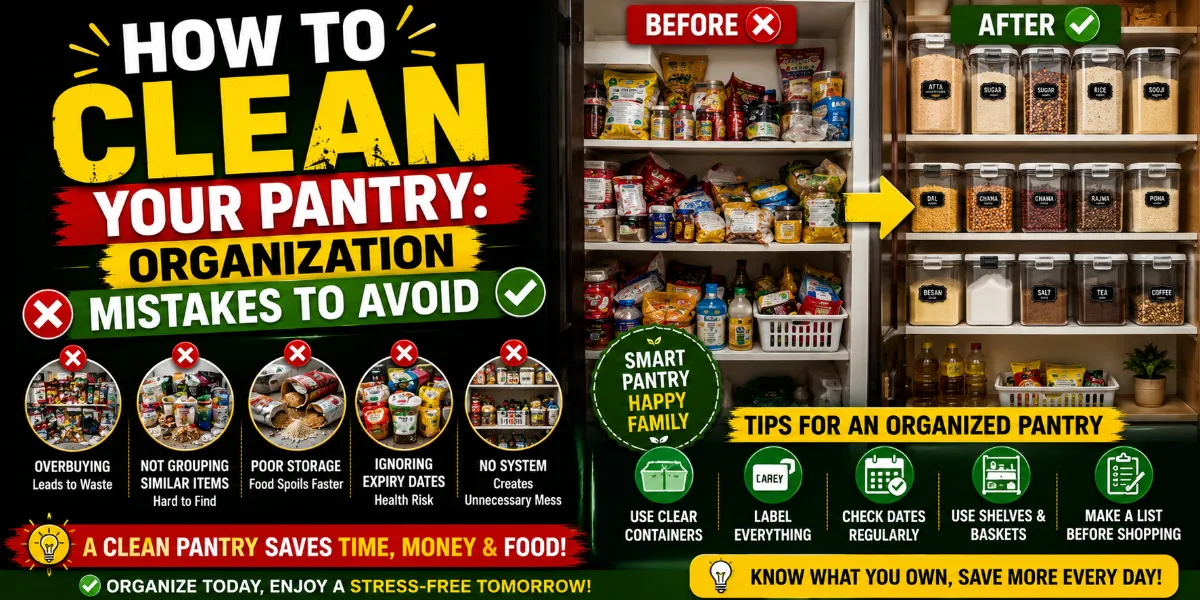
How to Clean Your Pantry: Organization Mistakes to Avoid
Every home has one. That cupboard, closet, or corner where you stash your groceries. You buy your weekly rashan, shove the bags inside, and shut the door. Out of sight, out of mind. But the next time you open that door, you are greeted by a chaotic mess. Bags of atta are spilling. Half-empty packets of pulses are scattered. Spices are mixed up. You cannot find the sugar you bought last week because it is buried behind three bags of rice.
This is the reality for many households. A messy pantry is not just an eyesore. It is a source of stress, wasted food, and wasted money. When you do not know what you have, you end up buying duplicates. When you cannot find an item, you buy another one, only to find the old one months later, expired and unusable. This is a costly and frustrating cycle.
But it does not have to be this way. Organizing your pantry is not difficult. It just requires a little awareness and a few simple habits. This guide will highlight the most common organization mistakes people make. It will give you practical tips on how to avoid them. It will help you create a pantry that is tidy, functional, and easy to manage. Read carefully. These tips will save you money, reduce stress, and make your life easier.
Why a Messy Pantry Is a Problem
Before we talk about how to organize, let us understand why a messy pantry is such a problem.
Wasted Food. When you cannot see what you have, food gets forgotten. It sits at the back of the shelf and goes bad. You throw it away. This is a direct waste of money.
Duplicate Purchases. You cannot find an item, so you buy another one. You bring it home, and then you find the old one. You now have two of the same item. You spent twice the money you needed to.
Time Wasted. You spend precious minutes searching for items. You open and close cupboards. You move things around. This is frustrating and time-consuming.
Stress and Frustration. A cluttered space is a cluttered mind. Walking into a messy pantry is stressful. It makes cooking and meal preparation feel like a chore.
Pest Infestations. A messy pantry is a breeding ground for pests. Spilled flour, open packages, and forgotten food attract weevils, ants, and rodents.
Health Risks. Expired food can be harmful. A messy pantry makes it harder to check expiry dates. You may accidentally consume spoiled food.
Common Organization Mistakes to Avoid
Many people make simple mistakes that lead to a messy pantry. Here are the most common ones.
Mistake 1: Not Having a System. The biggest mistake is not having a system at all. You just throw things in. There is no organization. There is no logic.
Mistake 2: Storing Items in Original Packaging. Leaving items in their original bags and boxes is a recipe for disaster. The packaging is not airtight. It tears easily. It does not stack well.
Mistake 3: Not Using Containers. Not using containers is another common mistake. Containers keep food fresh. They also help you see what you have.
Mistake 4: Not Labeling. If you use containers, you need to label them. Otherwise, you will forget what is inside.
Mistake 5: Buying Too Much. Buying in bulk can save money. But buying too much can lead to waste. If you cannot store it properly, it will go bad.
Mistake 6: Not Rotating Stock. You should always use the oldest items first. This is called FIFO (First In, First Out). Many people ignore this. They use the newest items first, leaving the old ones to expire.
Mistake 7: Not Checking Expiry Dates. This is a crucial step. You need to check expiry dates regularly. This ensures you are not keeping expired food.
Mistake 8: Not Grouping Similar Items. Keep similar items together. Keep all your pulses in one area. Keep all your spices in another. This makes it easier to find what you need.
Mistake 9: Not Having a Cleaning Schedule. A pantry needs regular cleaning. You should clean it out and reorganize it every few weeks.
Mistake 10: Overcrowding. If your pantry is too full, it is hard to see what you have. It is also hard to access items.
The Complete Guideline for Pantry Organization
Now let us get to the practical part. Here is a step-by-step guide to cleaning and organizing your pantry.
Step 1: Empty Your Pantry Completely
The first step is to empty your pantry completely. Take everything out. This gives you a clean canvas. It also forces you to handle every item.
Step 2: Sort and Categorize
Sort all your items into categories. This makes it easier to organize.
Common categories include:
Grains (rice, atta, maida, sooji)
Pulses and legumes (channa dal, mash dal, moong dal, masoor dal, lobia)
Spices (whole and ground)
Dry fruits and nuts
Sweeteners (sugar, gur)
Cooking oil and ghee
Canned and packaged foods
Baking supplies
Tea, coffee, and beverages
Step 3: Check Expiry Dates
This is a critical step. Check the expiry date of every item. Discard any expired or spoiled items. Do not keep them. They are a waste of space and a potential health hazard.
Step 4: Clean the Shelves
Before you put anything back, clean the shelves. Wipe them down with a damp cloth. Make sure they are completely dry before you start organizing.
Step 5: Transfer Items to Airtight Containers
This is one of the most important steps. Transfer your items to airtight containers. This keeps them fresh. It protects them from pests. It also makes them easy to stack and store.
Use glass jars with rubber seals for items like spices and dry fruits. They are non-porous and do not absorb odors.
Use food-grade plastic containers with tight-fitting lids for items like atta, rice, and pulses.
Make sure the containers are clean and completely dry before using them.
Step 6: Label Everything
Label every container. Write the name of the item and the date of purchase. This helps you identify what is inside. It also helps you track how long it has been stored.
You can use a permanent marker on the container or stick labels. If you use labels, make sure they are clear and easy to read.
Step 7: Organize by Category
Organize your pantry by category. Keep all the pulses together. Keep all the spices together. Keep all the grains together.
Place the categories logically. Place items that you use frequently in the most accessible areas. Place items that you use less frequently on higher or lower shelves.
Step 8: Use FIFO
Always use the oldest items first. When you buy new items, place them at the back of the shelf. Bring the older items to the front. This ensures that you are always using the freshest items.
Step 9: Use Baskets and Bins
Baskets and bins are great for organizing. You can use them to group smaller items. You can also use them to store items that do not fit neatly on shelves.
Use baskets for dry fruits and nuts.
Use bins for snacks and packaged foods.
Use canisters for sugar, tea, and coffee.
Step 10: Keep a Shopping List
Keep a shopping list on the pantry door. When you run out of an item, write it down. This prevents you from buying duplicates. It also ensures you never run out of essentials.
Step 11: Maintain Regularly
Organization is not a one-time thing. You need to maintain it. Spend a few minutes each week tidying up. Do a thorough clean and reorganize every few weeks.
Smart Storage Tips for Specific Items
Storing Atta (Whole Wheat Flour)
Atta has a short shelf life. Store it in an airtight container. Keep it in a cool, dry place. Avoid storing it near the stove or sink. If you live in a hot and humid climate, consider storing atta in the refrigerator.
Storing Rice
Rice also needs to be stored in an airtight container. This prevents moisture and insects. White rice has a longer shelf life than brown rice. Brown rice contains natural oils that can go rancid.
Storing Pulses
Pulses should be stored in airtight containers. Add a few bay leaves or a piece of asafoetida to repel insects. Check them regularly for signs of weevils.
Storing Spices
Spices should be stored in airtight containers. Keep them in a cool, dark place. Whole spices last longer than ground spices.
Storing Dry Fruits and Nuts
Dry fruits and nuts should be stored in airtight containers. Keep them in a cool, dry place. For long-term storage, store them in the refrigerator or freezer.
Storing Cooking Oil
Cooking oil should be stored in a cool, dark place. Keep it away from heat and light. Do not store it near the stove. Do not reuse oil.
How to Save Money with a Well-Organized Pantry
A well-organized pantry is not just about aesthetics. It is also about saving money. Here is how.
You Know What You Have. When your pantry is organized, you know exactly what you have. You do not buy duplicates.
You Reduce Waste. You can see what you have. You use items before they expire. This reduces waste and saves money.
You Can Take Advantage of Sales. When you know what you have, you can take advantage of sales. You know exactly what you need to stock up on.
You Cook More Efficiently. When you know where everything is, you can cook more efficiently. This saves time and reduces stress.
Common Storage Mistakes and How to Fix Them
Mistake: Leaving Items in Their Original Bags.
Fix: Transfer everything to airtight containers.
Mistake: Not Labeling Containers.
Fix: Label every container with the name and date of purchase.
Mistake: Not Checking Expiry Dates.
Fix: Check expiry dates regularly. Discard expired items.
Mistake: Overcrowding the Pantry.
Fix: Do not overcrowd. Keep only what you can use within a reasonable time.
Mistake: Storing Items Near the Stove.
Fix: Store items in a cool, dry place away from heat and moisture.
Mistake: Not Using FIFO.
Fix: Always use the oldest items first.
Mistake: Not Cleaning Regularly.
Fix: Schedule regular cleaning and organizing sessions.
Why Trust Malik Fayaz Traders for Your Grocery Needs
At Malik Fayaz Traders, we understand the importance of organization. We also understand the importance of quality. We source our products from trusted suppliers. We ensure they are fresh, pure, and of the highest quality.
We offer a wide variety of products, including atta, rice, pulses, spices, cooking oil, dry fruits, and household items. All our products are available at genuine wholesale mandi prices. We offer free delivery in Burewala city. You can order from the comfort of your home and receive fresh, quality products at your doorstep.
Final Thoughts
A clean and organized pantry is not just about aesthetics. It is about efficiency, savings, and peace of mind. When you know where everything is, you can cook with ease. You save money by avoiding duplicates and waste. You reduce stress and frustration.
Avoid the common mistakes. Have a system. Use containers. Label everything. Group similar items. Rotate your stock. Check expiry dates. Clean regularly. These simple steps will transform your pantry and your life.
Start today. Empty your pantry. Sort and categorize. Discard expired items. Clean the shelves. Transfer items to airtight containers. Label everything. Organize by category. Maintain regularly. You will be amazed at the difference.
Visit Malik Fayaz Traders for all your grocery and pantry needs. We are here to help you create a healthier, more organized home