
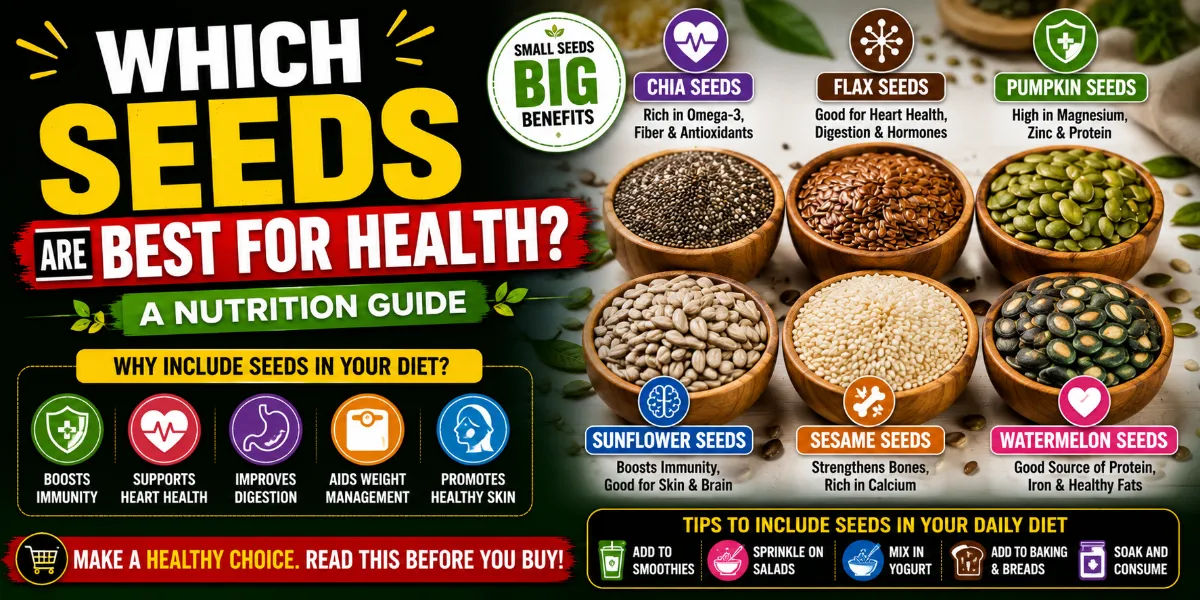
Which Seeds are Best for Health? A Nutrition Guide
Have you ever looked at a tiny seed and thought, "This small thing cannot possibly make a difference to my health"? If you have, you are not alone. Most people overlook seeds. They focus on vegetables, fruits, and meat. But seeds are some of the most nutrient-dense foods on the planet. They are small, affordable, and incredibly powerful.
In recent years, seeds like chia, flax, pumpkin, and sunflower have gained the title of "superfoods." But what does that actually mean? It means they are packed with essential nutrients that your body needs to function properly. They are rich in healthy fats, protein, fiber, vitamins, and minerals. They support heart health, brain function, digestion, and even weight management.
But with so many options available, which seeds are best for your health? Should you choose chia seeds or flax seeds? Are pumpkin seeds better than sunflower seeds? The answer depends on your specific health needs. This guide will break down the nutritional benefits of the most popular seeds. It will help you understand which ones are right for you and how to include them in your daily diet.
Read this guide before you buy. It will save you from confusion and help you make a truly healthy choice.
Why Seeds Deserve a Place in Your Daily Diet
Before we dive into the specific types of seeds, let us talk about why seeds are so good for you. Seeds are the embryos of plants. They contain everything a plant needs to grow. That means they are packed with concentrated nutrition.
Here are some of the key benefits of adding seeds to your diet.
Rich in Healthy Fats. Seeds are an excellent source of unsaturated fats, including omega-3 and omega-6 fatty acids. These are essential fats that your body cannot produce on its own. They support heart health, reduce inflammation, and improve brain function.
High in Fiber. Seeds are loaded with dietary fiber. Fiber keeps your digestive system healthy. It prevents constipation, promotes regular bowel movements, and feeds the good bacteria in your gut. Fiber also helps you feel full for longer, which is beneficial for weight management.
Excellent Source of Plant-Based Protein. If you are vegetarian or vegan, seeds are a great way to add protein to your diet. Protein is essential for building and repairing tissues.
Packed with Vitamins and Minerals. Seeds contain important micronutrients like magnesium, zinc, iron, calcium, and vitamin E. These nutrients support bone health, immune function, and skin health.
Antioxidant Properties. Many seeds are rich in antioxidants. Antioxidants protect your cells from damage caused by free radicals. This reduces the risk of chronic diseases like cancer and heart disease.
Versatile and Easy to Use. Seeds can be added to almost any meal. You can sprinkle them on salads, blend them into smoothies, mix them into yogurt, or use them in baking.
Now that you understand the benefits, let us look at some of the best seeds available.
Chia Seeds: The Hydration Hero
Chia seeds have become incredibly popular in recent years. And for good reason. These tiny black and white seeds are packed with nutrition.
Nutritional Profile
Chia seeds are rich in omega-3 fatty acids, specifically alpha-linolenic acid or ALA. They are also high in fiber. In fact, about 40% of a chia seed is fiber. They are a good source of calcium, magnesium, phosphorus, and zinc.
Health Benefits
Heart Health: The omega-3 fatty acids in chia seeds help reduce inflammation and lower blood pressure. They also help reduce LDL (bad) cholesterol levels.
Digestive Health: The high fiber content promotes regular bowel movements and prevents constipation. It also feeds the beneficial bacteria in your gut.
Weight Management: Chia seeds absorb water and expand in your stomach. This creates a feeling of fullness and reduces your appetite.
Bone Health: Chia seeds are a good source of calcium and magnesium, which are essential for strong bones.
Hydration: Chia seeds can absorb up to 12 times their weight in water. This helps maintain hydration and electrolyte balance.
How to Use Chia Seeds
Chia seeds have a mild, nutty flavor. They can be eaten raw or cooked. Here are some simple ways to include them in your diet.
Chia Pudding: Mix chia seeds with milk or yogurt and leave it overnight. It will form a pudding-like consistency. Add fruits and nuts for flavor.
Smoothies: Add a tablespoon of chia seeds to your smoothie. They blend well and add a nutritional boost.
Sprinkled on Food: Sprinkle chia seeds on salads, oatmeal, or yogurt.
Baking: Add chia seeds to bread, muffins, or pancakes.
Precautions
Chia seeds absorb a lot of water. If you eat them dry, they can expand in your throat and cause choking. Always soak them in liquid before consuming, or drink plenty of water with them.
Flax Seeds: The Heart Protector
Flax seeds are another nutritional powerhouse. They have been used for thousands of years for their health benefits. They come in two varieties: brown and golden. Both are equally nutritious.
Nutritional Profile
Flax seeds are one of the richest plant-based sources of omega-3 fatty acids. They are also high in fiber and lignans. Lignans are plant compounds that have antioxidant and estrogen-like properties.
Health Benefits
Heart Health: The omega-3 fatty acids in flax seeds help reduce inflammation, lower blood pressure, and decrease triglyceride levels. They also help reduce LDL cholesterol.
Digestive Health: The high fiber content promotes digestive health. It helps prevent constipation and supports a healthy gut microbiome.
Hormonal Balance: The lignans in flax seeds have estrogen-like properties. They can help balance hormones, especially in women going through menopause.
Cancer Prevention: Some studies suggest that lignans may help reduce the risk of breast cancer and prostate cancer.
Blood Sugar Control: Flax seeds can help improve insulin sensitivity and lower blood sugar levels.
How to Use Flax Seeds
Flax seeds have a slightly nutty taste. They are best consumed ground because the whole seeds can pass through your digestive system undigested. Here are some ways to use them.
Ground Flax: Grind flax seeds in a coffee grinder and add them to smoothies, oatmeal, or cereal.
Flax Egg: Mix ground flax seeds with water to create a vegan egg substitute for baking. Use 1 tablespoon of ground flax seeds mixed with 3 tablespoons of water.
Added to Baked Goods: Add ground flax seeds to bread, muffins, or pancakes.
Sprinkled on Food: Sprinkle ground flax seeds on salads, yogurt, or soups.
Precautions
Flax seeds are high in fiber. Introduce them gradually to your diet to avoid digestive discomfort. Drink plenty of water when consuming flax seeds.
Pumpkin Seeds: The Mineral Rich Snack
Pumpkin seeds are often discarded when carving pumpkins. But they are a nutritional treasure. These green seeds are delicious and incredibly healthy.
Nutritional Profile
Pumpkin seeds are rich in magnesium, zinc, and iron. They are also a good source of protein and healthy fats. They contain antioxidants like vitamin E and carotenoids.
Health Benefits
Heart Health: The magnesium in pumpkin seeds supports heart health. It helps regulate blood pressure and reduce the risk of heart disease.
Immune Support: Zinc is essential for a healthy immune system. Pumpkin seeds are one of the best plant-based sources of zinc.
Bone Health: Magnesium and zinc are important for maintaining strong bones. They help with bone formation and density.
Sleep Improvement: Pumpkin seeds contain tryptophan, an amino acid that helps promote sleep. They also contain zinc, which helps convert tryptophan into serotonin.
Prostate Health: Some studies suggest that pumpkin seeds may help reduce symptoms of an enlarged prostate.
How to Use Pumpkin Seeds
Pumpkin seeds have a mild, nutty flavor. They can be eaten raw or roasted. Here are some ways to include them in your diet.
Roasted Snack: Roast pumpkin seeds with a little salt and spices for a crunchy snack.
Sprinkled on Salads: Add pumpkin seeds to salads for a crunchy texture.
Added to Granola: Mix pumpkin seeds into homemade granola or trail mix.
In Smoothies: Add a spoonful of pumpkin seeds to your smoothie for added nutrition.
Precautions
Pumpkin seeds are high in calories. Eat them in moderation, especially if you are watching your weight. They are also high in fiber, so introduce them gradually.
Sunflower Seeds: The Vitamin E Bomb
Sunflower seeds are a popular snack. They are often eaten roasted and salted. But they are more than just a tasty treat. They are packed with nutrition.
Nutritional Profile
Sunflower seeds are one of the best sources of vitamin E. They are also high in selenium, magnesium, and B vitamins. They are a good source of protein and healthy fats.
Health Benefits
Skin Health: Vitamin E is essential for healthy skin. It protects your skin from damage caused by UV rays and pollution. It also helps keep your skin hydrated and youthful.
Heart Health: The healthy fats in sunflower seeds help lower LDL cholesterol and reduce inflammation.
Immune Support: Selenium is important for a healthy immune system. Sunflower seeds are a good source of selenium.
Bone Health: Magnesium and phosphorus are important for strong bones. Sunflower seeds provide both.
Energy Boost: Sunflower seeds are rich in B vitamins, which help your body convert food into energy.
How to Use Sunflower Seeds
Sunflower seeds have a mild, nutty flavor. They are available both shelled and unshelled. Here are some ways to include them in your diet.
As a Snack: Eat roasted sunflower seeds as a healthy snack.
Sprinkled on Salads: Add sunflower seeds to salads for a crunchy texture.
Added to Yogurt: Sprinkle sunflower seeds on yogurt or oatmeal.
In Baking: Add sunflower seeds to bread, muffins, or cookies.
Precautions
If you buy salted sunflower seeds, be aware of the high sodium content. Choose unsalted varieties to control your salt intake.
Sesame Seeds: The Calcium Champion
Sesame seeds are a common ingredient in many cuisines. They are used in tahini, halva, and as a topping for bread and pastries. They are small, but they are packed with nutrients.
Nutritional Profile
Sesame seeds are an excellent source of calcium. They are also rich in magnesium, iron, and zinc. They contain healthy fats and protein.
Health Benefits
Bone Health: The high calcium content makes sesame seeds excellent for bone health. They help prevent osteoporosis.
Heart Health: The healthy fats in sesame seeds help reduce LDL cholesterol and support heart health.
Hormonal Balance: Sesame seeds contain phytoestrogens, which can help balance hormones, especially in menopausal women.
Antioxidant Properties: Sesame seeds contain antioxidants that protect your cells from damage.
Digestive Health: The fiber in sesame seeds promotes digestive health.
How to Use Sesame Seeds
Sesame seeds have a nutty, slightly sweet flavor. Here are some ways to include them in your diet.
Sprinkled on Bread: Sprinkle sesame seeds on bread or buns before baking.
Added to Stir-Fries: Add sesame seeds to stir-fries or noodles.
In Tahini: Tahini is a paste made from sesame seeds. It is used in hummus and other dips.
Sprinkled on Salads: Add sesame seeds to salads for a crunchy texture.
Precautions
Sesame seeds are high in calories. Eat them in moderation. People with sesame allergies should avoid them.
Hemp Seeds: The Complete Protein
Hemp seeds are becoming more popular. They come from the hemp plant and are packed with nutrition. They have a mild, nutty flavor.
Nutritional Profile
Hemp seeds are an excellent source of complete protein. They contain all nine essential amino acids. They are also rich in omega-3 and omega-6 fatty acids. They contain magnesium, iron, and zinc.
Health Benefits
Muscle Building: The complete protein in hemp seeds supports muscle growth and repair.
Heart Health: The omega-3 and omega-6 fatty acids in hemp seeds support heart health. They reduce inflammation and lower blood pressure.
Digestive Health: The fiber in hemp seeds promotes digestive health.
Skin Health: The healthy fats in hemp seeds support skin health and reduce inflammation.
How to Use Hemp Seeds
Hemp seeds can be eaten raw. They are soft and easy to digest. Here are some ways to include them in your diet.
Sprinkled on Food: Sprinkle hemp seeds on salads, yogurt, or oatmeal.
In Smoothies: Add hemp seeds to your smoothies.
In Baking: Add hemp seeds to bread, muffins, or pancakes.
Precautions
Hemp seeds are safe to consume. They do not contain THC, the psychoactive compound in cannabis.
Which Seeds Are Best for Your Specific Needs?
Now that you know about the different seeds, you might be wondering which ones are best for you. The answer depends on your specific health needs.
For Heart Health: Choose chia seeds, flax seeds, and hemp seeds. They are rich in omega-3 fatty acids, which are excellent for your heart.
For Bone Health: Choose sesame seeds and pumpkin seeds. They are rich in calcium and magnesium.
For Digestive Health: Choose chia seeds and flax seeds. They are high in fiber.
For Skin Health: Choose sunflower seeds. They are rich in vitamin E.
For Protein: Choose hemp seeds. They contain complete protein.
For Weight Management: Choose chia seeds. They expand in your stomach and make you feel full.
For Hormonal Balance: Choose flax seeds and sesame seeds. They contain lignans and phytoestrogens.
For Sleep: Choose pumpkin seeds. They contain tryptophan.
How to Store Seeds to Keep Them Fresh
Seeds contain natural oils. These oils can go rancid if not stored properly. Here are some tips to keep your seeds fresh.
Store in Airtight Containers. Transfer your seeds to airtight glass jars or food-grade plastic containers. This prevents air and moisture from entering.
Keep in a Cool, Dark Place. Store seeds in a cool, dark place, away from sunlight and heat. A cupboard or pantry is a good choice.
Refrigerate or Freeze for Long-Term Storage. If you buy seeds in bulk, store them in the refrigerator or freezer. This extends their shelf life.
Check for Signs of Spoilage. Look for a bitter taste, a musty smell, or a change in color. If you notice these signs, discard the seeds.
Why Trust Malik Fayaz Traders for Your Seed Needs
At Malik Fayaz Traders, we understand the importance of quality. We source our seeds from reliable suppliers. We ensure that they are fresh, pure, and free from harmful additives. We offer a wide variety of seeds, including chia seeds, flax seeds, pumpkin seeds, sunflower seeds, and more.
We deliver your order in secure, sealed packages. We offer free delivery in Burewala city. Our team is committed to bringing you the best quality at genuine mandi prices.
Final Thoughts
Seeds are small, but they are mighty. They are some of the most nutrient-dense foods available. Adding them to your diet is one of the simplest and most effective ways to improve your health.
Choose the seeds that match your specific health needs. Add them to your daily meals. Store them properly to keep them fresh. Your body will thank you.
Visit Malik Fayaz Traders today for all your seed and grocery needs. We are here to help you make healthier choices for a healthier life