
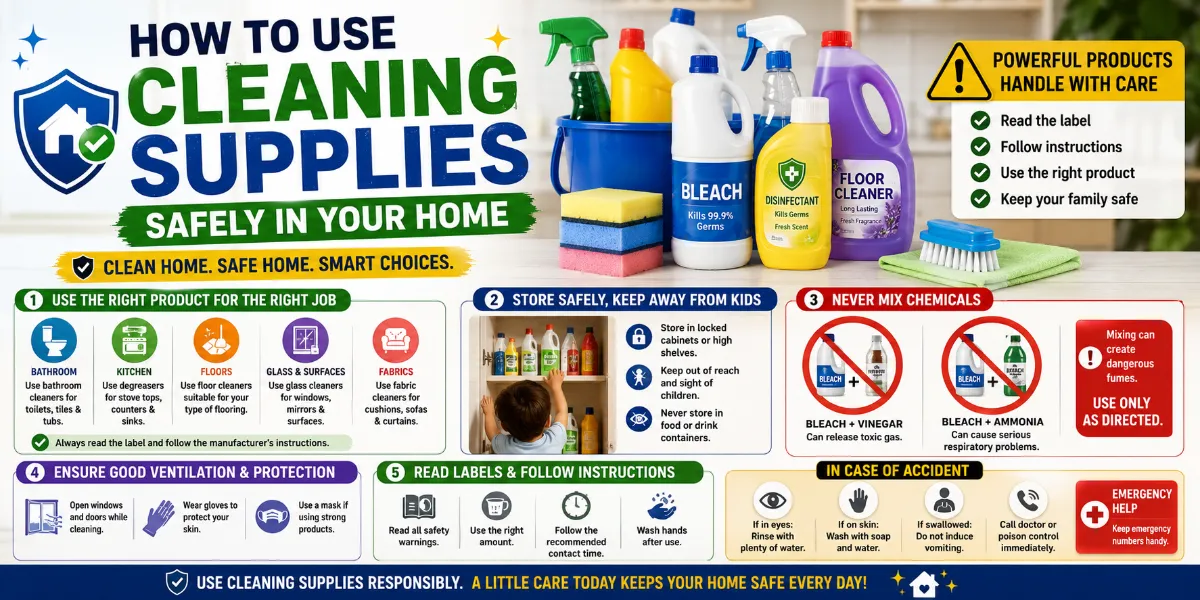
How to Use Cleaning Supplies Safely in Your Home
Walk into any home, and you will find a collection of cleaning supplies tucked away under the sink, in the laundry room, or in a storage closet. Bottles of bleach, floor cleaners, toilet cleaners, window sprays, and disinfectants line the shelves. We use them every day to keep our homes clean and germ-free. We spray, wipe, and scrub without giving it a second thought. We assume that because these products are sold in supermarkets, they must be safe.
But here is the uncomfortable truth. Many common cleaning supplies are highly toxic. They contain harsh chemicals that can harm your health. They can cause skin irritation, respiratory problems, and even serious poisoning. They are especially dangerous for children and pets. Many people do not realize the risks. They mix different cleaners together. They store them in unlabeled containers. They leave them within easy reach of curious little hands. These are mistakes that can have serious consequences.
This blog is a complete guide to using cleaning supplies safely in your home. It will explain the potential dangers of common cleaning products. It will give you practical guidelines for storing, using, and disposing of them safely. It will help you protect your family from unnecessary risks. A clean home should be a safe home. Let us make sure yours is both.
Why Cleaning Supplies Can Be Dangerous
Before we talk about safety, let us first understand why cleaning supplies can be dangerous. Many cleaning products contain chemicals that are designed to kill germs, dissolve grime, and cut through grease. These chemicals are effective at cleaning, but they can also be harmful to your health.
Toxic Chemicals. Many cleaning products contain toxic chemicals like ammonia, chlorine, phthalates, and volatile organic compounds (VOCs). These chemicals can be inhaled, absorbed through the skin, or ingested accidentally. They can cause a range of health problems, from mild irritation to serious poisoning.
Skin Irritation. Many cleaning products are harsh on the skin. They can cause redness, itching, burns, and allergic reactions. People with sensitive skin or conditions like eczema are especially vulnerable.
Respiratory Problems. The fumes from cleaning products can irritate the respiratory system. They can cause coughing, wheezing, shortness of breath, and asthma attacks. People with existing respiratory conditions like asthma or COPD are at a higher risk.
Eye Damage. Cleaning products can cause serious eye damage. Splashes can cause burns, irritation, and even permanent vision loss. Always protect your eyes when using cleaning products.
Poisoning. Cleaning products are a leading cause of poisoning in children. Young children are naturally curious. They explore the world by putting things in their mouths. A brightly colored bottle of cleaner can look like a drink. Ingesting even a small amount of a toxic cleaning product can be life-threatening.
Chemical Reactions. Mixing different cleaning products can be extremely dangerous. For example, mixing bleach with ammonia creates toxic chlorine gas. Mixing bleach with acid creates toxic chlorine gas. Inhaling these fumes can cause severe respiratory distress and even death. Never mix cleaning products.
Common Mistakes People Make with Cleaning Supplies
Many people make simple mistakes that put their families at risk. Here are some of the most common ones.
Storing Cleaning Supplies Within Reach of Children. This is one of the most dangerous mistakes. Children can easily open cabinets and reach bottles on lower shelves. Even if the bottle has a child-resistant cap, a determined child can open it. Never underestimate a child's curiosity.
Storing Cleaning Supplies Near Food. Storing cleaning products near food or in the kitchen where food is prepared can lead to accidental contamination. A spill or a leak can contaminate food or food preparation surfaces.
Not Reading the Label. The label on a cleaning product contains important safety information. It tells you what the product contains, what precautions to take, and what to do if there is an accident. Many people do not read the label. They use the product without understanding the risks.
Mixing Cleaning Products. This is a very dangerous mistake. People often mix different cleaners to try to make them more effective. This can create toxic fumes. Never mix cleaning products.
Using the Wrong Product for the Job. Using the wrong cleaning product can damage surfaces. It can also be ineffective. You might end up using more of the product or using it more aggressively, increasing your exposure to its chemicals.
Not Using Gloves. Many cleaning products can irritate your skin. Not wearing gloves exposes your skin to these harsh chemicals.
Not Ventilating the Area. The fumes from cleaning products can be harmful. Using them in a closed space without ventilation increases your exposure.
Transferring Products to Unlabeled Containers. Many people transfer cleaning products to smaller bottles or spray bottles. If you do not label these containers, there is a risk of accidental ingestion or misuse. Someone might mistake the cleaner for water or a beverage.
Ignoring Expiry Dates. Yes, cleaning products expire. Over time, the chemicals break down. They become less effective and may even become more dangerous. Do not use expired cleaning products.
Disposing of Cleaning Products Improperly. Pouring cleaning products down the drain or throwing them in the trash can be harmful to the environment. Some chemicals can contaminate water sources. Others can be harmful to sanitation workers.
The Complete Guideline for Safe Use of Cleaning Supplies
Now let us get to the practical part. Here is a step-by-step guide to using cleaning supplies safely in your home.
1. Read the Label
Before you use any cleaning product, read the label. The label contains important information, including:
The ingredients in the product.
The hazards associated with the product.
Precautions to take when using the product.
First aid instructions in case of an accident.
Proper storage and disposal instructions.
Do not use a product if you do not understand the instructions. If you have questions, look up the product online or contact the manufacturer.
2. Use the Right Product for the Right Job
Every cleaning product is designed for a specific purpose. Use the right product for the right job. For example, use a glass cleaner for windows and mirrors. Use a bathroom cleaner for tiles and fixtures. Use a floor cleaner for floors. Do not use a product on a surface it is not designed for.
Using the wrong product can damage the surface. It can also be less effective, meaning you will have to use more of it.
3. Follow the Instructions
Follow the instructions on the label carefully. Do not use more than the recommended amount. More is not always better. Using more product does not necessarily make it more effective. It can leave behind harmful residues.
Pay attention to the recommended contact time. Some products need to sit on a surface for a few minutes to work effectively. Others need to be rinsed off. Follow these instructions.
4. Ventilate the Area
Always use cleaning products in a well-ventilated area. Open windows and doors. Turn on fans. This helps the fumes dissipate. It reduces your exposure to harmful chemicals. Avoid using cleaning products in small, enclosed spaces.
5. Wear Protective Gear
Wear gloves to protect your hands from harsh chemicals. If the label recommends it, wear eye protection and a mask. This is especially important when using products like bleach, ammonia, or oven cleaners.
6. Never Mix Cleaning Products
This is the golden rule. Never mix cleaning products. Mixing bleach with ammonia creates toxic chlorine gas. Mixing bleach with acid creates toxic chlorine gas. Mixing different cleaners can also create heat, fumes, and dangerous reactions.
Always use one product at a time. Rinse and dry the surface before using another product.
7. Keep Cleaning Supplies Out of Reach of Children and Pets
This is essential. Store all cleaning supplies in a locked cabinet or on a high shelf that children and pets cannot access. Do not store them under the kitchen sink or in any easily accessible location.
Use child-resistant locks on cabinets. Do not rely on child-resistant caps. They are not foolproof.
8. Store Cleaning Supplies Properly
Store cleaning supplies in their original containers. The original containers are designed for safe storage. They have proper labels and child-resistant caps. Do not transfer cleaning products to other containers.
Store cleaning supplies in a cool, dry place. Extreme temperatures can cause the chemicals to break down or become unstable.
9. Label Containers Clearly
If you must transfer a cleaning product to a new container, label it clearly. Write the name of the product, its ingredients, and any hazards. Do not use food or beverage containers to store cleaning products. This is extremely dangerous.
10. Never Mix Bleach with Other Cleaners
Bleach is a powerful cleaning agent. But it should never be mixed with other cleaners. Mixing bleach with ammonia, acid, or any other cleaner can create toxic fumes. Always use bleach alone.
11. Use Natural or Homemade Alternatives
Consider using natural or homemade cleaning alternatives. Vinegar, baking soda, and lemon juice are effective for many cleaning tasks. They are non-toxic and safe for your family and the environment.
Vinegar and Water: A mixture of vinegar and water is great for cleaning windows and mirrors.
Baking Soda: Baking soda is an excellent abrasive cleaner. It can be used to scrub sinks and bathtubs.
Lemon Juice: Lemon juice is a natural bleach and disinfectant.
Hydrogen Peroxide: Hydrogen peroxide is a safe and effective disinfectant.
12. Dispose of Cleaning Products Properly
Do not pour cleaning products down the drain unless the label says it is safe. Do not throw them in the trash unless the label says it is safe. Some cleaning products are considered hazardous waste. They need to be disposed of properly.
Check with your local municipality for hazardous waste disposal guidelines. Do not take shortcuts.
13. Keep the Poison Control Number Handy
Keep the poison control number handy in case of an accident. In Pakistan, you can call the national poison control center. Keep the number saved in your phone and posted in a visible location.
First Aid for Accidental Exposure
Even with all precautions, accidents can happen. Here is what to do in case of accidental exposure.
Inhalation: If you or someone else has inhaled fumes, move to an area with fresh air immediately. If breathing is difficult, seek medical attention right away.
Skin Contact: If a cleaning product comes into contact with your skin, remove any contaminated clothing. Wash the area thoroughly with soap and water for at least 15 minutes. If irritation persists, seek medical attention.
Eye Contact: If a cleaning product gets into your eyes, rinse your eyes with running water for at least 15 minutes. Keep your eyes open and blink while rinsing. Seek medical attention immediately. Do not rub your eyes.
Ingestion: If a cleaning product is swallowed, do not induce vomiting unless the label instructs you to do so. Some products can cause more damage if vomited. Drink a small amount of water or milk if the label instructs. Seek medical attention immediately. Call the poison control center.
Natural Alternatives to Toxic Cleaning Products
One of the best ways to stay safe is to use natural alternatives. Here are some recipes for effective, non-toxic cleaners.
All-Purpose Cleaner: Mix equal parts white vinegar and water in a spray bottle. Add a few drops of essential oil for fragrance. This is great for countertops, tables, and other surfaces.
Glass Cleaner: Mix 2 cups of water, 1/4 cup of white vinegar, and 1/2 teaspoon of dish soap. This is an effective and streak-free glass cleaner.
Scouring Powder: Mix baking soda and a little water to form a paste. Use this to scrub sinks, bathtubs, and tiles. It is abrasive enough to clean but gentle enough not to damage surfaces.
Disinfectant: Mix 2 cups of water, 1 tablespoon of hydrogen peroxide, and a few drops of tea tree oil. This is a safe and effective disinfectant.
Toilet Cleaner: Sprinkle baking soda in the toilet bowl. Add a small amount of vinegar. Let it sit for 10 minutes. Scrub with a toilet brush.
The Role of Malik Fayaz Traders in Your Home Safety
At Malik Fayaz Traders, we care about your family's safety. That is why we offer a carefully selected range of cleaning supplies that are effective and safe. We source our products from reputable manufacturers. We ensure that our products meet safety standards.
We also offer a selection of natural and eco-friendly cleaning alternatives. These products are gentler on your family and the environment. We provide clear information about our products. We are here to help you make informed choices.
We offer free delivery in Burewala city. You can order from the comfort of your home and receive your products at your doorstep.
Final Thoughts
Cleaning supplies are essential for a clean and healthy home. But they can also be dangerous if not used properly. The risks are real. But they are also avoidable.
Read the labels. Use the right product for the right job. Ventilate the area. Wear protective gear. Never mix cleaning products. Store them safely out of reach of children and pets. Dispose of them properly. And consider using natural alternatives.
Your family's health and safety depend on it. Do not take shortcuts. Be aware. Be careful. Make your home a clean and safe place for everyone.
Visit Malik Fayaz Traders for all your cleaning and household needs. We are here to help you create a safe, healthy, and happy home