
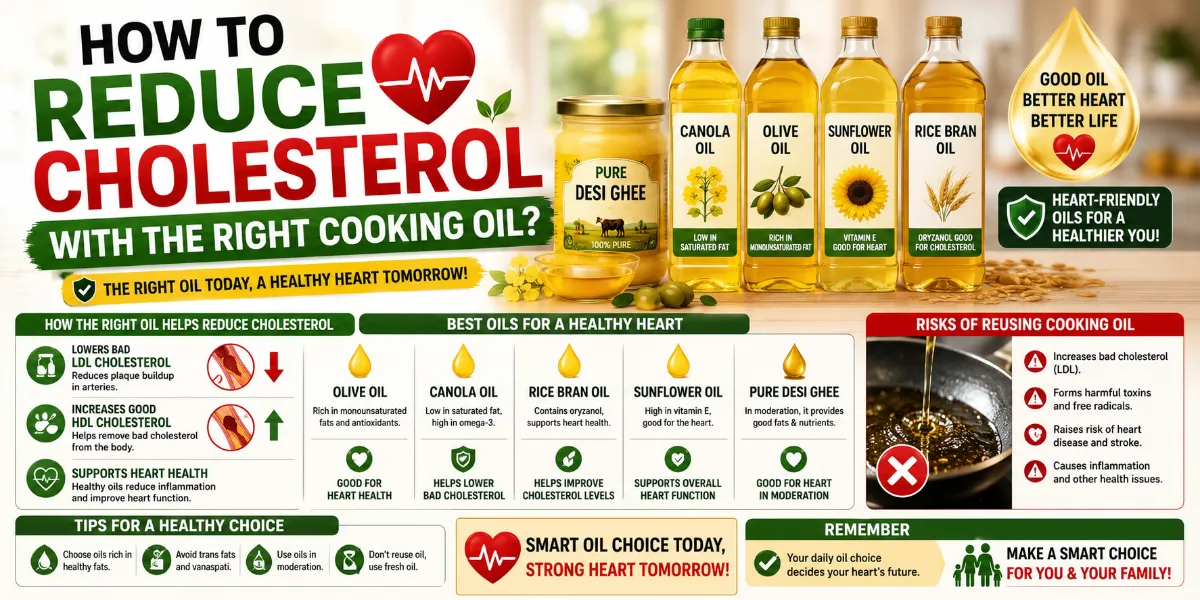
How to Reduce Cholesterol with the Right Cooking Oil?
Imagine walking through your daily life feeling perfectly fine. You eat your meals, go to work, spend time with your family, and sleep peacefully at night. Everything seems normal. But inside your body, something dangerous is slowly building up. It is silent. It is invisible. And it could be putting you at serious risk of a heart attack or stroke.
This silent threat is high cholesterol. It does not announce itself with pain or visible symptoms. You cannot feel it. You cannot see it. The only way to know is through a blood test. And by the time you find out, the damage may have already started. This is why high cholesterol is often called the "silent killer."
But here is the good news. You have more control over your cholesterol levels than you might think. One of the most powerful tools you have is sitting right in your kitchen. It is the cooking oil you use every single day. Yes, that simple bottle of oil can either protect your heart or put it at risk. The choice is yours.
This blog is a complete guide to understanding how cooking oil affects cholesterol. It will explain which oils are heart-friendly and which ones you should avoid. It will teach you about the benefits of pure ghee and specific vegetable oils. It will also warn you about the dangers of reusing oil. By the end of this guide, you will have all the knowledge you need to make a smart, healthy choice for your family.
Understanding Cholesterol: The Good and the Bad
Before we talk about oil, let us first understand what cholesterol actually is. Many people hear the word "cholesterol" and immediately think it is something bad. But that is not entirely true. Cholesterol is a waxy, fat-like substance that is found in every cell of your body. Your body needs some cholesterol to function properly. It helps build cell membranes, produce vitamin D, and make certain hormones.
However, not all cholesterol is the same. There are two main types that you need to know about.
LDL Cholesterol (Low-Density Lipoprotein) is often called the "bad" cholesterol. When you have too much LDL in your blood, it can build up on the walls of your arteries. This buildup is called plaque. Over time, plaque makes your arteries narrow and hard. This condition is known as atherosclerosis. When your arteries are narrowed, blood flow to your heart and brain is restricted. If a piece of plaque breaks off, it can block an artery completely. This causes a heart attack or stroke.
HDL Cholesterol (High-Density Lipoprotein) is often called the "good" cholesterol. HDL acts like a scavenger. It picks up excess cholesterol from your arteries and transports it back to your liver. Your liver then removes it from your body. This is why higher levels of HDL are associated with a lower risk of heart disease.
The goal is to keep your LDL low and your HDL high. This balance is crucial for heart health. And your diet, especially the fats you consume, plays a direct role in achieving this balance.
How Cooking Oil Affects Your Cholesterol Levels
Now let us connect the dots. How does the cooking oil you use affect your cholesterol levels? It all comes down to the type of fats that the oil contains. Different oils have different fatty acid compositions. These fatty acids interact with your body in different ways.
There are three main categories of fatty acids. Understanding these categories is essential for making the right choice.
Saturated Fats are solid at room temperature. They are found in butter, ghee, coconut oil, palm oil, and animal fats. Saturated fats raise your LDL (bad) cholesterol levels. This is why health experts recommend limiting your intake of saturated fats. However, not all saturated fats are equally harmful. Some research suggests that certain saturated fats, like those found in ghee, may have a neutral or even positive effect when consumed in moderation.
Trans Fats are the worst type of fat. They are artificially created through a process called hydrogenation. This process turns liquid oils into solid fats. Trans fats are found in partially hydrogenated oils, which are used in many processed and packaged foods. Trans fats raise your LDL cholesterol and lower your HDL cholesterol. This is a double blow to your heart health. Trans fats are also linked to inflammation and insulin resistance. You should avoid trans fats completely.
Unsaturated Fats are liquid at room temperature. They are found in vegetable oils like olive oil, canola oil, sunflower oil, and rice bran oil. Unsaturated fats can be further divided into monounsaturated fats and polyunsaturated fats. Both types are heart-healthy. They help lower your LDL cholesterol and may even raise your HDL cholesterol. They also provide essential fatty acids that your body cannot produce on its own.
When you choose cooking oil, you want to prioritize oils that are high in unsaturated fats and low in saturated and trans fats. This simple rule can dramatically improve your cholesterol profile.
The Best Heart-Healthy Oils for Lowering Cholesterol
Now that you understand the science, let us get practical. Here are some of the best cooking oils for reducing cholesterol and protecting your heart.
Olive Oil
Olive oil is widely considered the gold standard of heart-healthy oils. It is rich in monounsaturated fats, which are known to reduce bad cholesterol. Extra virgin olive oil is the best choice because it is minimally processed. It retains many of the natural antioxidants found in olives. These antioxidants help reduce inflammation in your body. Olive oil is perfect for sautéing, roasting, and salad dressings. However, it has a relatively low smoking point, so it is not ideal for deep frying.
Canola Oil
Canola oil is another excellent choice for heart health. It has the lowest amount of saturated fat among all common cooking oils. At the same time, it is high in monounsaturated fats. Canola oil is light in flavor and versatile. You can use it for baking, frying, sautéing, and grilling. It has a high smoking point, making it suitable for high-heat cooking. Many health organizations, including the American Heart Association, recommend canola oil for daily use.
Sunflower Oil
Sunflower oil is rich in polyunsaturated fats, which are heart-healthy. It is also a good source of vitamin E, which is an antioxidant that protects your cells from damage. Sunflower oil has a mild flavor and a high smoking point, making it suitable for frying. However, be aware that it is prone to oxidation, so it should be stored in a cool, dark place.
Rice Bran Oil
Rice bran oil is gaining popularity in Pakistan, and for good reason. It has a good balance of saturated and unsaturated fats. It also contains a unique compound called oryzanol. Oryzanol has been shown to lower cholesterol absorption in the intestines. This makes rice bran oil particularly effective for improving cholesterol levels. It also has a high smoking point, making it ideal for Indian and Pakistani cooking.
Pure Ghee
Ghee, or clarified butter, is a traditional favorite in Pakistani households. It is made by simmering butter to remove the water and milk solids. The result is a pure fat that has a rich, nutty flavor. Ghee is high in saturated fat, which is why many people believe it is bad for cholesterol. However, recent research suggests that ghee made from grass-fed butter may have some health benefits. It contains conjugated linoleic acid, or CLA, which is linked to better heart health and weight management. Ghee also contains butyrate, a fatty acid that supports gut health.
The key with ghee is moderation. It is a flavorful fat that should be used sparingly. Do not make it your primary cooking oil. Instead, use it occasionally to add flavor to special dishes.
Oils You Should Limit or Avoid
Not all oils are beneficial. Some are actively harmful to your cholesterol levels and overall health. Here are the ones you should limit or avoid.
Palm Oil
Palm oil is very high in saturated fat. It is cheap and widely used in packaged foods, snacks, and commercial frying. However, it is not good for your heart. Regular consumption of palm oil raises your LDL cholesterol levels. Always check food labels and avoid products that list palm oil as a main ingredient.
Coconut Oil
Coconut oil has become trendy in recent years. Many people claim it has health benefits. While it does contain some beneficial compounds, it is extremely high in saturated fat. In fact, it has more saturated fat than butter. If you have high cholesterol, you should limit your intake of coconut oil.
Partially Hydrogenated Oils
These oils are the worst. They are artificially created to be solid at room temperature. They are loaded with trans fats, which raise your bad cholesterol and lower your good cholesterol. Partially hydrogenated oils are found in many processed foods, including baked goods, fried snacks, and margarine. Avoid them completely. Check ingredient labels for "partially hydrogenated" and avoid those products.
Reused or Reheated Oil
Reusing cooking oil is a common practice in Pakistani kitchens. After frying pakoras or samosas, the oil is strained and reused multiple times. This is a serious health hazard. Each time oil is heated, it undergoes chemical changes. It breaks down and produces harmful compounds, including free radicals and trans fats. These compounds increase with each reuse. Reusing oil even once is not ideal. Reusing it multiple times is downright dangerous.
The Dangers of Reusing Cooking Oil
Let us take a closer look at why reusing oil is so harmful. When oil is heated to high temperatures, its chemical structure changes. This process is called oxidation. Oxidation creates free radicals. Free radicals are unstable molecules that can damage your cells. They are linked to inflammation, heart disease, cancer, and premature aging.
When you reuse oil, the breakdown products accumulate. The oil becomes darker in color and thicker in consistency. It develops an unpleasant smell and taste. The smoking point drops. This means the oil will burn and smoke at a lower temperature. When it burns, it releases more harmful compounds.
Food cooked in reused oil absorbs these harmful compounds. You are essentially eating a meal that is coated in toxic substances. Over time, this can have serious consequences for your health.
Reusing oil also affects the quality of your food. Fried food becomes greasy and heavy. The texture is less crispy. The taste is off. You are not enjoying your food as much, and you are harming your health at the same time. It is a lose-lose situation.
If you must reuse oil, do it only once. Strain the oil to remove food particles. Store it in a sealed container in a cool, dark place. Use it for the next frying session only. Do not keep it for weeks or months. After the second use, discard it safely. Better yet, reduce your frying frequency. Switch to healthier cooking methods that use less oil.
The Importance of Checking Labels and Expiry Dates
When buying cooking oil, do not be careless. Read the label carefully. Look for information about the type of oil, its composition, and its source. Check for any added ingredients or preservatives. The simpler the ingredient list, the better.
Pay attention to the manufacturing date and the expiry date. Do not buy oil that is close to expiry, even if it is on sale. Expired oil is rancid and harmful. Consuming rancid oil can cause stomach upset and inflammation. Over time, it contributes to chronic diseases.
Also, check for certifications. Look for logos from reputable organizations. These certifications indicate that the oil meets certain quality and safety standards.
Buy oil that is packaged in dark-colored bottles. Dark glass or plastic protects the oil from light, which can accelerate oxidation. Avoid oil that is packaged in clear containers if you plan to store it for a long time.
How to Make the Switch to Healthier Cooking
Switching to a healthier cooking oil does not have to be difficult. Here are some practical tips to help you make the transition.
Start gradually. Do not throw away all your current oil and buy new ones overnight. Use up what you have. When it is time to restock, choose a heart-healthy option.
Match the oil to the cooking method. Use olive oil for sautéing and salad dressings. Use canola or rice bran oil for frying. Use ghee sparingly for special dishes.
Invest in quality. Cheaper oils are often lower quality. They may be adulterated or processed with harmful chemicals. Spend a little more on a trusted brand. Your health is worth it.
Reduce your oil consumption. Pakistani cuisine is often heavy on oil. You can reduce the amount of oil in your cooking without sacrificing flavor. Use non-stick pans. Steam, bake, or grill instead of frying. Experiment with spices and herbs to add flavor instead of relying on oil.
Be mindful of portion sizes. Even heart-healthy oils are high in calories. Use oil in moderation. A general guideline is one to two tablespoons of oil per person per day.
The Role of Diet and Lifestyle in Cholesterol Management
Cooking oil is important, but it is only one piece of the puzzle. To effectively reduce your cholesterol, you need to look at your overall diet and lifestyle.
Eat More Fiber. Soluble fiber helps lower LDL cholesterol. Good sources include oats, barley, beans, lentils, fruits, and vegetables. Add more pulses and grains to your meals.
Eat More Fish. Fatty fish like salmon and mackerel are rich in omega-3 fatty acids. Omega-3s are good for your heart. They help lower blood pressure and reduce inflammation.
Eat More Nuts and Seeds. Almonds, walnuts, and flaxseeds are heart-healthy. They contain unsaturated fats and fiber. Eat them as a snack or add them to your meals.
Reduce Your Intake of Processed Foods. Processed foods are often high in trans fats, saturated fats, and sodium. They contribute to high cholesterol and heart disease. Choose whole, natural foods instead.
Exercise Regularly. Physical activity helps raise your HDL (good) cholesterol and lower your LDL (bad) cholesterol. Aim for at least 30 minutes of moderate exercise most days of the week. Even a brisk walk can make a difference.
Quit Smoking. Smoking damages your blood vessels and lowers your HDL cholesterol. Quitting smoking is one of the best things you can do for your heart.
Manage Stress. Chronic stress can raise your cholesterol levels. Practice relaxation techniques like deep breathing, meditation, or yoga.
Why Trust Malik Fayaz Traders for Your Cooking Oil Needs
When it comes to buying cooking oil, you need a supplier you can trust. At Malik Fayaz Traders, we understand the importance of purity and quality. We source our cooking oils and ghee from reputable manufacturers. We ensure that every product meets high standards of safety and nutrition.
We offer a wide range of cooking oils, including canola oil, sunflower oil, rice bran oil, and pure ghee. We also offer other grocery staples like pulses, rice, spices, and dry fruits. Our products are available at genuine wholesale mandi prices. You get premium quality without paying inflated retail prices.
We also provide free delivery in Burewala city. You can shop from the comfort of your home and receive fresh, quality products at your doorstep. Our team is committed to your satisfaction and your health.
Final Thoughts
Reducing your cholesterol is one of the most important things you can do for your heart health. And choosing the right cooking oil is a powerful step in that direction. It is not a complicated or expensive change. It is a simple, practical decision that can have a profound impact on your family's well-being.
Be aware of the oils you buy. Avoid loose oil. Check expiry dates. Read labels. Understand the difference between saturated, unsaturated, and trans fats. Choose oils that are high in monounsaturated and polyunsaturated fats. Use ghee and saturated fats in moderation. Never reuse cooking oil. And remember to look at your overall diet and lifestyle.
Your heart works tirelessly for you every single day. It deserves the best care you can give it. Start by making smart choices in your kitchen. Start by choosing the right cooking oil.
Visit Malik Fayaz Traders today for all your grocery needs. We are here to help you make healthier choices for a healthier life.