
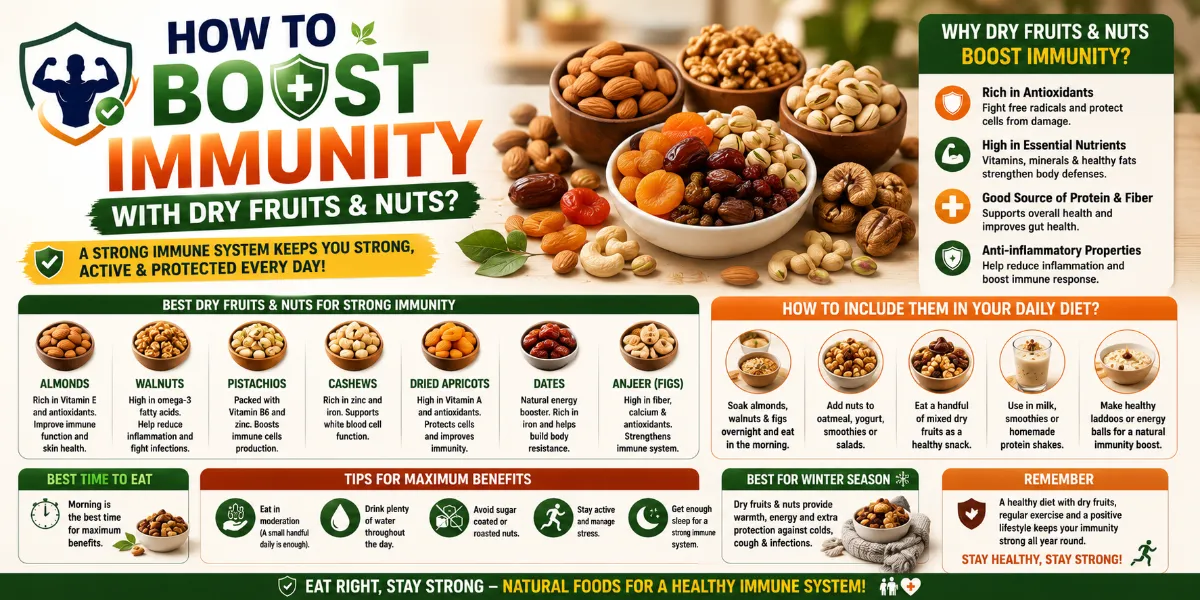
How to Boost Immunity with Dry Fruits and Nuts?
Every single day, your body is under attack. Viruses, bacteria, and other harmful pathogens are constantly trying to invade your system. The only thing standing between you and serious illness is your immune system. It is your body's natural defense system. It is a complex network of cells, tissues, and organs that work together to protect you from infection and disease.
But here is the thing. Your immune system does not work alone. It needs fuel to function properly. It needs the right nutrients to produce immune cells, fight off infections, and repair damage. If you are not giving your body the right fuel, your immune system will be weak and sluggish. You will be more susceptible to colds, flu, and other infections.
One of the best ways to fuel your immune system is by eating dry fruits and nuts. These small, nutrient-dense foods are packed with antioxidants, vitamins, minerals, and healthy fats. They have been used for centuries to boost immunity, improve energy, and promote overall health.
This blog will explain how dry fruits and nuts can boost your immunity. It will highlight the best ones to eat, especially during the winter months. It will also give you practical tips on how to include them in your daily diet. Read this guide. Make these small changes. Boost your health naturally.
The Link Between Diet and Immunity
To understand how dry fruits and nuts boost immunity, we need to understand the connection between diet and the immune system. Your immune system relies on a steady supply of nutrients to function effectively. These nutrients are used to produce immune cells, antibodies, and other components of the immune response.
Antioxidants. One of the most important nutrients for immunity is antioxidants. Antioxidants protect your cells from damage caused by free radicals. Free radicals are unstable molecules that can damage your cells and contribute to chronic diseases. Antioxidants neutralize free radicals and reduce inflammation. This helps your immune system function more effectively.
Vitamins. Vitamins like vitamin C, vitamin E, and vitamin D are essential for immune function. Vitamin C stimulates the production of white blood cells, which are the frontline defenders against infection. Vitamin E is a powerful antioxidant that protects immune cells from damage. Vitamin D is crucial for immune regulation.
Minerals. Minerals like zinc, selenium, and iron are also important for immunity. Zinc is essential for the development and function of immune cells. Selenium helps regulate the immune response. Iron is needed for the production of hemoglobin, which carries oxygen to cells.
Healthy Fats. Healthy fats, like omega-3 fatty acids, are also important. They help reduce inflammation and support the function of immune cells. They also help your body absorb fat-soluble vitamins like vitamin E.
Protein. Protein is the building block of immune cells. Adequate protein intake is essential for producing antibodies and other immune components.
Dry fruits and nuts are a rich source of all these nutrients. They are nature's multivitamins.
The Top Dry Fruits and Nuts for Immunity
Now let us look at some of the best dry fruits and nuts for boosting immunity.
Almonds: The Vitamin E Powerhouse
Almonds are one of the best foods for boosting immunity. They are packed with vitamin E, which is a powerful antioxidant. Just a handful of almonds provides a significant portion of your daily vitamin E requirement.
How They Boost Immunity. Vitamin E protects your cells from damage caused by free radicals. It also enhances the function of immune cells. Almonds also contain zinc and selenium, which are essential for immune function. They are also a good source of healthy fats, which support cell membrane health.
Winter Benefits. Almonds generate heat in the body. They are especially beneficial during winter. Eating a handful of almonds in the morning can keep you warm and energized throughout the day.
How to Eat. Eat them raw. Soak them overnight for better digestion. Add them to your morning cereal, smoothies, or salads.
Walnuts: The Omega-3 Champion
Walnuts are unique among nuts because they are an excellent source of omega-3 fatty acids. They also contain antioxidants and vitamin E.
How They Boost Immunity. Omega-3 fatty acids reduce inflammation in the body. Chronic inflammation weakens the immune system. Walnuts also promote gut health. A healthy gut is essential for a strong immune system. They also support heart health, which is important for overall well-being.
Winter Benefits. Walnuts are also warming. They provide sustained energy, which is helpful during the cold winter months.
How to Eat. Eat them raw as a snack. Add them to baked goods or salads. Use them as a topping for oatmeal or yogurt.
Pistachios: The Vitamin B6 Source
Pistachios are another excellent nut for immunity. They are a good source of vitamin B6, which is crucial for immune function.
How They Boost Immunity. Vitamin B6 supports the production of antibodies and white blood cells. Pistachios also contain antioxidants and fiber. The fiber supports a healthy gut, which is important for immunity.
Winter Benefits. Pistachios are a warming food. They are also a good source of energy, which can help combat the winter sluggishness.
How to Eat. Eat them as a snack. Add them to your desserts. Use them as a topping for ice cream or yogurt.
Cashews: The Zinc-Rich Snack
Cashews are a good source of zinc, an essential mineral for immune function. They also contain healthy fats and fiber.
How They Boost Immunity. Zinc is essential for the development and function of immune cells. A deficiency in zinc can weaken your immune system. Cashews also contain antioxidants that reduce inflammation.
Winter Benefits. Cashews are a warming food. They are also a good source of energy, which helps you stay active during the winter.
How to Eat. Eat them raw or roasted. Add them to stir-fries or curries. Use them as a base for creamy sauces.
Dates: The Energy Booster
Dates are a sweet and nutritious dry fruit. They are rich in antioxidants, fiber, and essential minerals.
How They Boost Immunity. Dates are rich in antioxidants, which protect your cells from damage. They are also a good source of iron, which prevents anemia. Dates also support digestive health, which is linked to a strong immune system.
Winter Benefits. Dates are warming and provide a quick energy boost. They are perfect for the winter months when you need extra energy.
How to Eat. Eat them as a snack. Use them as a natural sweetener in recipes. Add them to smoothies or oatmeal.
Raisins: The Iron-Rich Snack
Raisins are dried grapes. They are rich in antioxidants, fiber, and iron.
How They Boost Immunity. Raisins contain antioxidants that reduce inflammation. They are also a good source of iron, which prevents anemia. They support digestive health and provide a quick energy boost.
Winter Benefits. Raisins are warming and provide sustained energy. They are a great snack during the winter.
How to Eat. Eat them as a snack. Add them to baked goods or cereals. Use them as a topping for yogurt or salads.
Figs: The Prebiotic Powerhouse
Figs are a delicious and nutritious dry fruit. They are rich in fiber, antioxidants, and minerals.
How They Boost Immunity. Figs are a good source of prebiotics. Prebiotics feed the good bacteria in your gut. A healthy gut is essential for a strong immune system. Figs are also rich in antioxidants that reduce inflammation.
Winter Benefits. Figs are warming and help keep you full for longer. They are a great addition to your winter diet.
How to Eat. Eat them as a snack. Add them to baked goods or cereals. Use them as a topping for yogurt or salads.
Apricots: The Vitamin A Source
Dried apricots are a rich source of vitamin A, which is essential for immune function.
How They Boost Immunity. Vitamin A supports the health of your skin and mucous membranes. These are your body's first line of defense against pathogens. Apricots also contain antioxidants that protect your cells.
Winter Benefits. Apricots are warming and provide a quick energy boost. They are perfect for the winter months.
How to Eat. Eat them as a snack. Add them to your cereals or salads. Use them in baking.
How to Incorporate Dry Fruits and Nuts into Your Daily Diet
Adding dry fruits and nuts to your diet is easy. Here are some practical tips.
As a Snack. Keep a small container of mixed nuts and dry fruits at your desk or in your bag. Whenever you feel hungry, reach for them instead of unhealthy snacks.
With Breakfast. Add chopped almonds, walnuts, or raisins to your morning cereal, oatmeal, or yogurt. This adds flavor, texture, and a nutritional boost.
In Smoothies. Add a handful of nuts or a few dates to your smoothie. This adds creaminess and sweetness without added sugar.
In Baking. Add dry fruits and nuts to bread, muffins, cakes, or cookies. This adds flavor, texture, and nutrition.
With Salads. Add chopped nuts or raisins to your salads. This adds a crunch and a hint of sweetness.
With Rice or Curries. Add nuts to rice dishes or curries. They add flavor and texture.
As a Dessert. Dates and figs can be eaten as a natural dessert. They are sweet, nutritious, and satisfy your sugar cravings.
How Many Dry Fruits and Nuts Should You Eat?
While dry fruits and nuts are healthy, they are also high in calories. Eating too many can lead to weight gain. Portion control is important.
A general guideline is a small handful per day. This is about 30 grams of nuts or a few pieces of dry fruit. This provides the benefits without the excess calories.
Common Mistakes to Avoid When Eating Dry Fruits and Nuts
Mistake 1: Eating Too Many. As mentioned, nuts are high in calories. Eating too many can lead to weight gain.
Mistake 2: Buying Roasted or Salted Nuts. Roasted and salted nuts can be high in unhealthy fats and sodium. Choose raw, unsalted nuts whenever possible.
Mistake 3: Ignoring Quality. Dry fruits and nuts can go rancid. Always check the quality. Buy from a trusted source.
Mistake 4: Eating Them in Isolation. While dry fruits are healthy, they should be part of a balanced diet. Do not rely on them exclusively for your nutrition.
Mistake 5: Not Storing Them Properly. Dry fruits and nuts should be stored in a cool, dry place. This prevents them from going rancid.
Why Choose Malik Fayaz Traders for Your Dry Fruits and Nuts
At Malik Fayaz Traders, we understand the importance of quality. We source our dry fruits and nuts from reliable suppliers. We ensure they are fresh, pure, and free from artificial additives. We offer a wide variety of options, including almonds, walnuts, pistachios, cashews, dates, figs, raisins, and apricots.
We offer free delivery in Burewala city. You can order from the comfort of your home and receive fresh, quality products at your doorstep.
Final Thoughts
Boosting your immunity does not require expensive supplements or complicated routines. It starts with simple, natural foods. Dry fruits and nuts are a powerful tool in your health arsenal. They are packed with antioxidants, vitamins, minerals, and healthy fats that support your immune system.
Add them to your daily diet. Eat them as a snack. Add them to your meals. Enjoy their taste and their benefits. Your body will thank you.
Visit Malik Fayaz Traders for all your dry fruit and nut needs. We are here to help you boost your health naturally