
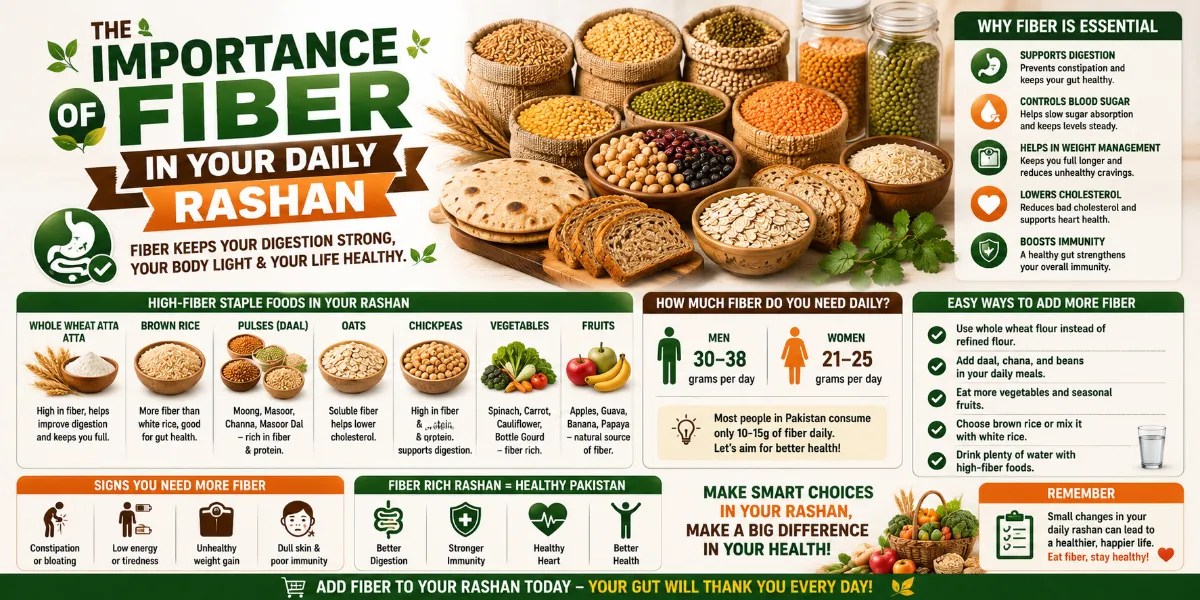
The Importance of Fiber in Your Daily Rashan
Walk into any Pakistani kitchen, and you will find the usual staples. Atta, rice, pulses, cooking oil, and spices. These are the building blocks of our daily meals. We eat them every day. We assume that because we eat these foods, we are getting all the nutrition we need. But here is the uncomfortable truth. Many of us are missing one of the most important nutrients for our health. That nutrient is fiber.
Fiber is often overlooked. It does not get the attention that protein or vitamins get. But fiber is essential for your health. It keeps your digestive system strong. It prevents constipation. It helps control blood sugar. It lowers cholesterol. It even helps with weight management. Despite all these benefits, many Pakistani diets are seriously lacking in fiber.
Why is this happening? Because we have moved away from traditional, whole foods. We are eating more refined and processed foods. White bread, polished rice, and sugary snacks are replacing whole grains and pulses. These foods are low in fiber and high in empty calories. This is a dangerous trend. It is contributing to rising rates of digestive problems, diabetes, heart disease, and obesity.
This blog is a complete guide to understanding the importance of fiber. It will explain what fiber is and why it is so important. It will highlight which staple foods are high in fiber. It will show you how to make simple changes to your weekly rashan list to improve your health. Read carefully. These small changes can have a huge impact on your well-being.
What Is Fiber and Why Is It So Important?
Fiber is a type of carbohydrate that your body cannot digest. Unlike other carbohydrates that are broken down into sugar, fiber passes through your digestive system largely intact. It sounds like it might be useless, but it is actually essential for your health.
There are two types of fiber: soluble and insoluble.
Soluble Fiber. This type of fiber dissolves in water. It forms a gel-like substance in your digestive tract. This slows down digestion. It helps you feel full for longer. It also helps lower cholesterol and stabilize blood sugar levels. Good sources of soluble fiber include oats, barley, pulses, and fruits.
Insoluble Fiber. This type of fiber does not dissolve in water. It adds bulk to your stool and helps food pass more quickly through your stomach and intestines. This helps prevent constipation. Good sources of insoluble fiber include whole grains, nuts, and vegetables.
Your body needs both types of fiber. They work together to keep your digestive system healthy.
The Health Benefits of Fiber
Fiber offers a wide range of health benefits. Here are the most important ones.
Digestive Health. Fiber keeps your digestive system running smoothly. Insoluble fiber adds bulk to your stool and helps prevent constipation. Soluble fiber feeds the good bacteria in your gut. A healthy gut is linked to a strong immune system and overall well-being.
Blood Sugar Control. Soluble fiber slows down the absorption of sugar. This helps prevent spikes in blood sugar levels. This is especially important for people with diabetes or those at risk of developing it.
Heart Health. Soluble fiber can help lower LDL (bad) cholesterol levels. It binds to cholesterol in the digestive tract and helps remove it from the body. This reduces your risk of heart disease.
Weight Management. Fiber makes you feel full. It stays in your stomach longer than other nutrients. This reduces your appetite and prevents overeating. It also helps you maintain a healthy weight.
Gut Health. Fiber feeds the beneficial bacteria in your gut. These bacteria produce short-chain fatty acids, which are important for gut health. A healthy gut is linked to a reduced risk of many diseases.
Why Many Pakistani Diets Lack Fiber
Despite these benefits, many Pakistani diets are deficient in fiber. Here is why.
Refined Grains. We have moved away from whole grains. We eat white rice and white flour (maida). These are refined grains. They have been stripped of their bran and germ, which are the parts of the grain that contain most of the fiber.
Lack of Vegetables. Many meals are heavy on meat and carbohydrates but light on vegetables. Vegetables are excellent sources of fiber.
Processed Foods. Processed and packaged foods are often low in fiber. They are high in sugar and unhealthy fats.
Traditional Foods. While traditional foods like pulses and whole grains are high in fiber, our modern diets are moving away from them.
High-Fiber Foods to Include in Your Daily Rashan
Now let us look at the foods you should be including in your rashan to boost your fiber intake.
Whole Grains
Grains are an excellent source of fiber. But it is important to choose whole grains instead of refined grains.
Whole Wheat Flour (Atta). This is a staple in Pakistani diets. Make sure you are using whole wheat atta, not maida. Whole wheat atta is high in fiber.
Brown Rice. Brown rice is a whole grain. It is higher in fiber than white rice.
Oats. Oats are an excellent source of soluble fiber. Add them to your breakfast.
Bajra (Pearl Millet). Bajra is a traditional grain that is high in fiber. Use it to make rotis or porridge.
Jowar (Sorghum). Jowar is another high-fiber grain. It is a good alternative to wheat.
Pulses and Legumes
Pulses are some of the best sources of fiber. They are also rich in protein.
Channa Dal. This is a high-fiber pulse. It is also rich in protein.
Masoor Dal. Masoor dal is another excellent source of fiber. It is also quick-cooking.
Moong Dal. Moong dal is light and easy to digest. It is also a good source of fiber.
Mash Dal. Mash dal is rich and creamy. It is also high in fiber.
Lobia (Cowpeas). Lobia is a whole pulse that is high in fiber. It is also a good source of protein.
Vegetables
Vegetables are an important source of fiber. Make sure you are eating a variety of vegetables.
Spinach. Spinach is a leafy green vegetable that is high in fiber.
Okra (Bhindi). Okra is a good source of soluble fiber.
Cauliflower. Cauliflower is a high-fiber vegetable.
Cabbage. Cabbage is another high-fiber vegetable.
Carrots. Carrots are a good source of soluble fiber.
Fruits
Fruits are another excellent source of fiber.
Apples. Apples are high in soluble fiber.
Pears. Pears are also high in fiber.
Bananas. Bananas are a good source of fiber.
Dates. Dates are a sweet and high-fiber dry fruit.
Figs. Figs are rich in fiber and prebiotics.
Seeds
Seeds are a concentrated source of fiber.
Chia Seeds. Chia seeds are very high in fiber.
Flax Seeds. Flax seeds are also very high in fiber.
Pumpkin Seeds. Pumpkin seeds are a good source of fiber.
How Much Fiber Do You Need?
The recommended daily intake of fiber for adults is about 25 to 30 grams per day. However, the average intake is much lower. Many people consume less than 15 grams per day. This is far below the recommended level.
To reach 25 grams of fiber a day, you need to make conscious choices. Include high-fiber foods in every meal. Start your day with oats or whole wheat roti. Add pulses to your lunch and dinner. Eat a variety of vegetables. Snack on fruits and nuts.
Simple Changes to Increase Your Fiber Intake
Increasing your fiber intake is easier than you think. Here are some simple changes you can make.
Switch to Whole Grains. Replace white rice with brown rice. Replace maida with whole wheat atta. Use whole grains like bajra and jowar.
Add Pulses to Your Meals. Add pulses to your soups and stews. Make dal a regular part of your meals.
Eat More Vegetables. Add a portion of vegetables to every meal. Eat them with your roti and rice.
Snack on Fruits. Instead of reaching for chips, reach for an apple, a pear, or a handful of dates.
Add Seeds to Your Diet. Add chia seeds or flax seeds to your yogurt or smoothies.
Start Your Day with Fiber. Eat oatmeal or a whole grain cereal for breakfast.
Read Food Labels. When buying packaged foods, check the label. Look for foods that are high in fiber.
Common Mistakes to Avoid When Increasing Fiber
When you increase your fiber intake, there are a few common mistakes to avoid.
Mistake 1: Increasing Fiber Too Quickly. Increasing fiber suddenly can cause gas, bloating, and stomach cramps. Increase your intake gradually.
Mistake 2: Not Drinking Enough Water. Fiber absorbs water. You need to drink plenty of water when you increase your fiber intake.
Mistake 3: Only Eating One Type of Fiber. You need both soluble and insoluble fiber. Eat a variety of high-fiber foods.
Mistake 4: Ignoring Gut Health. Your gut needs healthy bacteria to process fiber. Eat fermented foods like yogurt to support gut health.
The Role of Malik Fayaz Traders in Your Healthy Rashan
At Malik Fayaz Traders, we are committed to your health. We understand the importance of fiber in your daily diet. That is why we offer a wide variety of high-fiber foods. From whole grains to pulses, from fresh vegetables to dry fruits and seeds, we have everything you need to boost your fiber intake.
We source our products from trusted suppliers. We ensure they are fresh, pure, and of the highest quality. We offer free delivery in Burewala city. You can order from the comfort of your home and receive fresh, quality products at your doorstep.
Final Thoughts
Fiber is an essential nutrient that many of us are missing. It is the key to a healthy digestive system, a healthy heart, and a healthy weight. The good news is that increasing your fiber intake is easy. It just requires small changes to your daily rashan.
Switch to whole grains. Add pulses to your meals. Eat more vegetables. Snack on fruits. Add seeds to your diet. Make these simple changes and you will notice a real difference in your health and well-being.
Your health is your greatest asset. Protect it. Start making smart changes to your rashan today.
Visit Malik Fayaz Traders for all your grocery needs. We are here to help you build a healthier, happier life.