
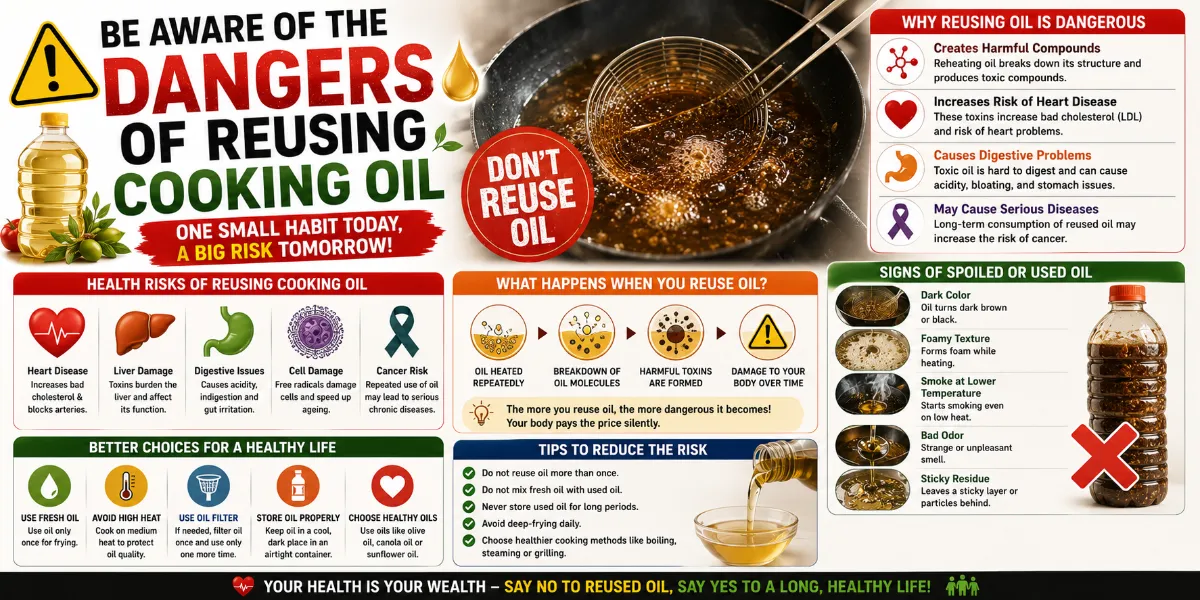
Be Aware of the Dangers of Reusing Cooking Oil
Walk into any Pakistani kitchen, and you will see it. After frying pakoras, samosas, or crispy fish, the oil is carefully strained and poured back into a bottle. It is stored away to be used again the next day, or the day after. This practice is so common that we do not even think about it. We have been doing it for generations. Our mothers did it. Our grandmothers did it. It must be safe, right?
This is a dangerous assumption. Reusing cooking oil is one of the most harmful habits in our kitchens. It is a practice that is silently damaging our health, one meal at a time. The oil that we reuse is not the same as fresh oil. It undergoes chemical changes when heated. It breaks down. It produces toxic compounds. These compounds are linked to heart disease, cancer, and other serious health problems.
This blog is a health warning. It is a wake-up call. It will explain the dangers of reusing cooking oil. It will teach you the signs of spoiled oil. It will give you practical tips to protect your family's long-term health. This is not about scaring you. It is about making you aware. Once you know the risks, you can make better choices.
What Happens to Oil When You Heat It?
To understand the dangers of reusing oil, you first need to understand what happens to oil when you heat it. Cooking oil is made up of fatty acids. When you heat oil to high temperatures, several chemical reactions occur.
Oxidation. The fatty acids react with oxygen in the air. This process is called oxidation. It creates free radicals. Free radicals are unstable molecules that can damage your cells. They are linked to inflammation, heart disease, and cancer.
Hydrolysis. The fatty acids react with water from the food being fried. This breaks down the oil. It creates free fatty acids. These free fatty acids lower the smoking point of the oil. This means the oil will smoke and burn at a lower temperature.
Polymerization. The fatty acids link together to form larger molecules. This makes the oil thicker and darker. It also creates a sticky residue that coats your food and your kitchen.
Trans Fat Formation. When oil is heated repeatedly, it can form trans fats. Trans fats are the worst type of fat. They raise your bad cholesterol and lower your good cholesterol. They increase your risk of heart disease.
Acrylamide Formation. Acrylamide is a chemical that forms when starchy foods are fried at high temperatures. It is classified as a probable human carcinogen.
Every time you reuse oil, these processes accelerate. The oil breaks down further. The concentration of harmful compounds increases. You are essentially cooking your food in a toxic soup.
The Health Risks of Reusing Cooking Oil
The chemical changes that occur in reused oil have serious consequences for your health. Here are some of the most significant risks.
Heart Disease. Reused oil is high in trans fats and oxidized fats. These fats raise your LDL (bad) cholesterol and lower your HDL (good) cholesterol. They also promote inflammation. All of these factors increase your risk of heart disease, heart attacks, and strokes.
Cancer. The free radicals and acrylamides in reused oil are carcinogenic. They can damage your DNA and promote the growth of cancer cells. Regular consumption of reused oil is linked to an increased risk of certain cancers, including breast, colon, and prostate cancer.
High Blood Pressure. Reused oil can contribute to high blood pressure. The oxidized fats and free radicals damage your blood vessels. This makes them less flexible and more prone to narrowing. This increases your blood pressure.
Digestive Problems. Reused oil is difficult to digest. It can cause stomach upset, bloating, and diarrhea. It can also irritate your stomach lining.
Inflammation. The free radicals in reused oil promote inflammation throughout your body. Chronic inflammation is linked to a wide range of diseases, including diabetes, arthritis, and autoimmune disorders.
Liver Damage. Your liver has to process the toxins in reused oil. Over time, this can damage your liver cells. It can lead to fatty liver disease and other liver problems.
Accelerated Aging. The free radicals in reused oil damage your cells. This accelerates the aging process. It can lead to wrinkles, fine lines, and other signs of premature aging.
Signs That Your Cooking Oil Has Gone Bad
How do you know if your oil is spoiled? Here are some signs to look for.
Smoke. The oil smokes at a lower temperature than it used to. Fresh oil has a high smoking point. Reused oil has a lower smoking point. If your oil starts smoking quickly, it has broken down.
Foaming. The oil foams when you add food. This is a sign of hydrolysis. The oil has broken down and contains water and free fatty acids.
Dark Color. The oil has become dark, cloudy, or brown. Fresh oil is clear and golden. Reused oil is dark and opaque.
Thick Consistency. The oil has become thick and viscous. It is no longer free-flowing.
Bad Smell. The oil has a musty, rancid, or fishy smell. Fresh oil has a neutral smell.
Bad Taste. The oil imparts a bitter or burnt taste to the food. This is a clear sign that the oil has gone bad.
Sticky Residue. The oil leaves a sticky residue on the pan and the food. This is a sign of polymerization.
If you notice any of these signs, do not use the oil. Discard it immediately.
The Myth of Filtering and Storing Oil
Many people believe that filtering and storing oil makes it safe to reuse. They strain the oil to remove food particles and store it in a cool, dark place. They think this prevents the oil from breaking down. This is a dangerous myth.
Filtering the oil removes food particles, which can burn and accelerate breakdown. But filtering does not remove the harmful compounds that have already formed. The oil has already undergone chemical changes. These changes are permanent.
Storing the oil in a cool, dark place slows down the breakdown process. But it does not reverse it. The oil is still damaged. It is still harmful.
Even if you filter and store the oil correctly, it is still not safe to reuse.
How Many Times Can You Reuse Oil?
The short answer is that you should not reuse oil at all. It is better for your health to use fresh oil every time.
But we understand that oil is expensive. Frying requires a lot of oil. We know that many people are on a tight budget. If you must reuse oil, follow these guidelines.
Never Reuse Oil More Than Once. If you must reuse oil, only reuse it once. Use it for a second frying session and then discard it.
Do Not Reuse Oil After High-Heat Frying. If you have used the oil for deep frying, do not reuse it. Deep frying heats the oil to very high temperatures. This causes significant breakdown.
Do Not Reuse Oil That Has Been Used for Strong-Flavored Foods. Oil used for fish or heavily spiced foods absorbs the flavors. Reusing it will impart those flavors to other foods.
Do Not Reuse Oil That Has Been Stored for More Than a Week. Even if it was only used once, do not store oil for more than a week. It will continue to break down over time.
Do Not Reuse Oil That Shows Any Signs of Spoilage. If the oil has smoke, foam, a dark color, a thick consistency, a bad smell, or a bad taste, discard it.
Healthier Alternatives to Reusing Oil
Instead of reusing oil, consider these healthier alternatives.
Use Less Oil. Reduce the amount of oil you use for frying. Use a non-stick pan. This reduces the amount of oil you need.
Switch to Baking or Roasting. Instead of deep frying, try baking or roasting. These methods use less oil and are healthier.
Use an Air Fryer. Air fryers use hot air to crisp food. They use very little oil. They are a great alternative to deep frying.
Use Fresh Oil Every Time. While it is more expensive, it is better for your health. Your health is worth the investment.
Dispose of Used Oil Properly. Do not pour used oil down the drain. This can clog your pipes. Instead, let the oil cool. Pour it into a sealed container and dispose of it in the trash.
The Environmental Impact of Reused Oil
Reusing oil is also bad for the environment. When you pour used oil down the drain, it can contaminate water sources. It can also clog pipes and damage sewage systems. Proper disposal of used oil is important for the environment.
The Cost of Reusing Oil
Reusing oil might seem like a way to save money. But it can actually cost you more in the long run. The health problems caused by reused oil can lead to expensive medical bills. The cost of treating heart disease, cancer, and other chronic conditions far outweighs the money you save on oil.
A Simple Guide to Frying Healthily
If you must fry, here are some tips to make it healthier.
Use the Right Oil. Use oils with a high smoking point, like canola, sunflower, or rice bran oil. Do not use olive oil for frying.
Do Not Overheat the Oil. Heat the oil to the right temperature. Do not let it smoke. Use a thermometer if possible.
Do Not Overcrowd the Pan. Adding too much food at once lowers the temperature of the oil. This causes the food to absorb more oil.
Pat Food Dry. Dry the food with a paper towel before frying. This removes excess moisture and reduces oil absorption.
Drain Excess Oil. Place fried food on paper towels to absorb excess oil.
Do Not Reuse Oil. Use fresh oil for every frying session.
Why Malik Fayaz Traders Cares About Your Health
At Malik Fayaz Traders, we care about your health. We want you to enjoy delicious food without compromising your well-being. We offer a wide range of high-quality cooking oils from trusted brands. We ensure our oils are fresh, pure, and of the highest quality.
We also offer a variety of healthy alternatives to frying. From fresh produce to whole grains and pulses, we have everything you need to cook healthy meals. We offer free delivery in Burewala city. You can order from the comfort of your home and receive fresh, quality products at your doorstep.
Final Thoughts
Reusing cooking oil is a dangerous habit. It is not worth the risk to your health. The toxic compounds that form in reused oil can cause serious health problems, including heart disease, cancer, and high blood pressure.
Be aware of the signs of spoiled oil. If your oil smokes, foams, is dark, thick, smells bad, or tastes bad, discard it. Do not use it. Your health is more important than a few rupees.
Make the switch to healthier cooking methods. Use less oil. Try baking or roasting. Use an air fryer. And if you must fry, use fresh oil every time.
Your family deserves the best. Protect their health. Make the right choice today.
Visit Malik Fayaz Traders for all your cooking oil and grocery needs. We are here to help you make healthier choices for a healthier life.